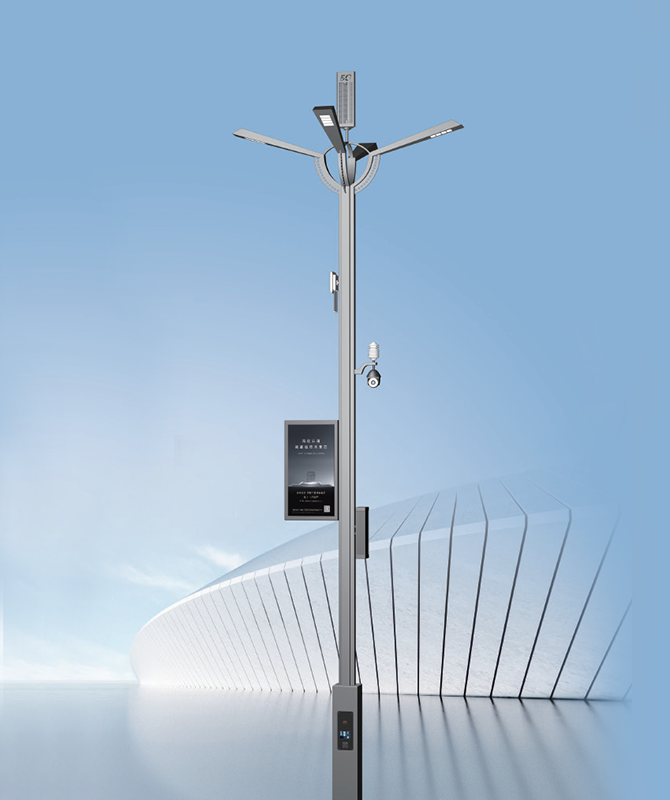
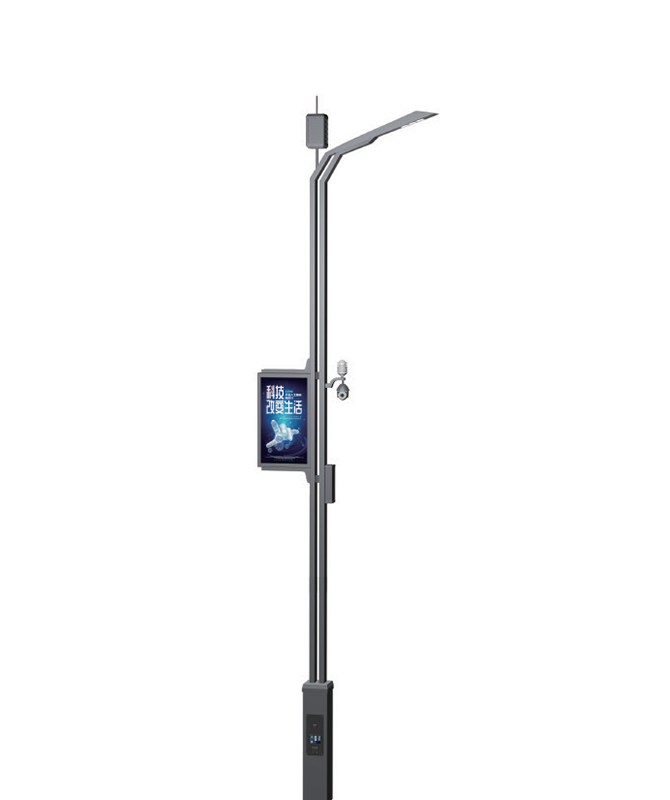
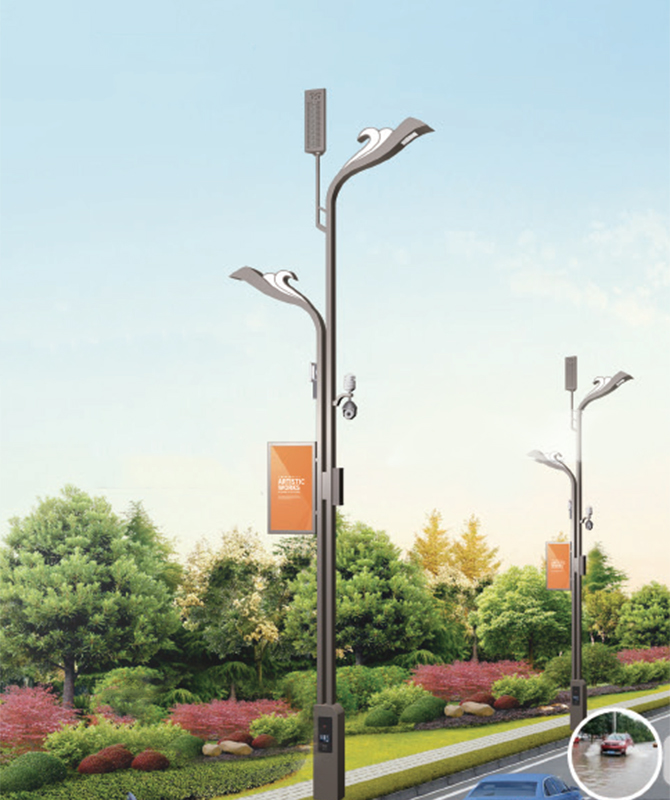
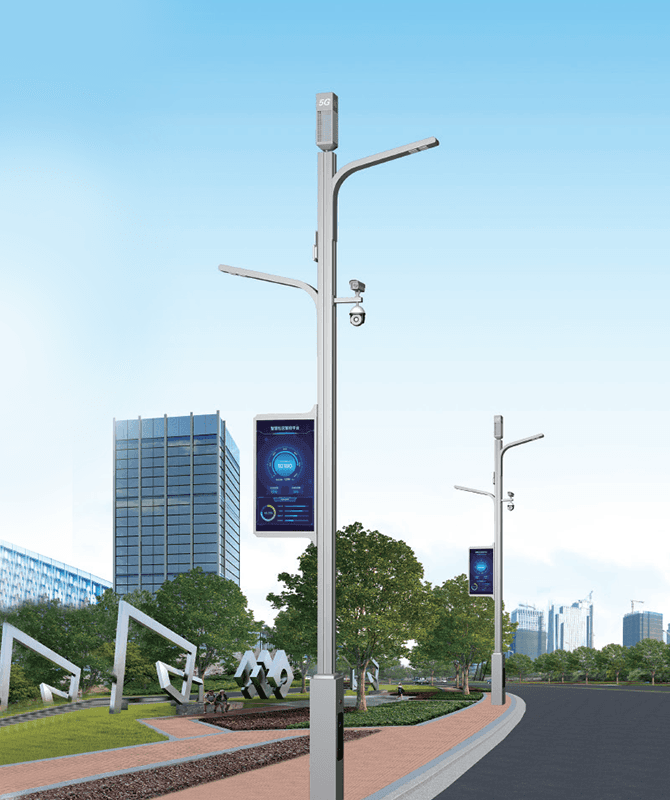
A high mast light is a pole-mounted lighting system, generally standing taller than 25 meters, that gathers a cluster of fixtures at the top of a single steel pole to spread illumination across a wide open area from one concentrated point. Rather than lining a road or plaza with many shorter poles spaced close together, a project can rely on a smaller number of these towers, each covering a broad radius, which reduces the total count of foundations, cabling runs, and maintenance points across a site.
The main shaft of a high mast lighting tower is typically formed from high-quality steel plate rolled into a polygonal, tapering shape rather than a simple cylindrical tube, which gives the structure better resistance to bending loads while keeping the base wide enough for stability. Sections are joined through a plug-in or slip-fit connection method, allowing the pole to be shipped in segments and assembled on site rather than transported as one unreasonably long piece.
Once formed, the steel undergoes hot-dip galvanizing along with additional anti-corrosion treatment, a process where the finished pole is submerged in molten zinc so that a bonded protective layer covers every surface, including interior seams that would otherwise be difficult to coat. This treatment matters considerably in coastal ports and highway environments where salt spray, humidity, and de-icing chemicals accelerate rust on untreated steel.
At the top of the pole sits the luminaire bracket, or lamp panel, which holds the actual light fixtures in a fixed ring or cluster. This bracket frame is commonly built from stainless steel to withstand the same weather exposure as the pole itself while supporting the combined weight of multiple fixtures mounted at height.
The lamp panel at the top of a high mast structure is not built to one single shape; several configurations exist depending on how the light needs to be aimed and how the site wants the tower to appear visually.
| Panel Form | Description | Typical Setting |
|---|---|---|
| Frame type | Open skeletal ring holding individual fixtures at adjustable angles | Ports, freight yards, interchange loops |
| Closed type | Enclosed housing that shields fixtures from wind and debris | Coastal or dust-prone locations |
| Ball type | Spherical housing distributing light in a rounded pattern | City squares, decorative plazas |
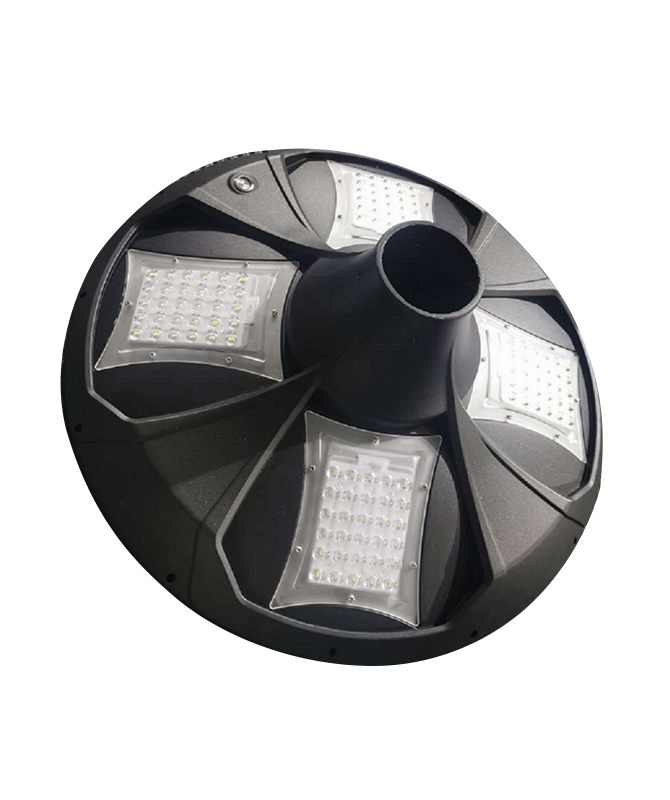
| Flying saucer type | Flattened disc profile spreading fixtures around its rim | Stadiums, large open yards |
| Landscape type | Styled housing blended into surrounding architecture | Parks, civic plazas, scenic routes |
The choice among these forms usually depends on whether the priority is raw functional coverage, as in a port or freight yard, or a combination of function with visual appearance, as tends to be the case in a public square or landscaped corridor.
Two light source categories dominate high mast installations: sodium lamps and LED fixtures. Sodium lamps, particularly high-pressure sodium types, have a long history in this application because of their ability to project a strong amber-toned beam over long distances, which suits open highway corridors and freight terminals where color rendering is a secondary concern compared to raw visibility. LED fixtures have become increasingly common because they can be aimed more precisely through individual optics, run at lower operating temperatures, and allow dimming or zonal control that sodium lamps generally cannot match.
Because the fixtures sit tightly clustered at a single elevated point rather than scattered across many shorter poles, the resulting light pattern on the ground tends to blend into a broad, even wash rather than a series of separated pools of brightness and shadow. This blending effect is one of the reasons high mast lighting is often described as producing conditions resembling daytime visibility across large paved surfaces, with illumination levels, brightness, and uniformity that support activities requiring continuous visual clarity across a wide field, such as sorting cargo containers or guiding aircraft ground traffic.
Ports and container terminals rely on these towers to keep loading zones visible around the clock, since cargo handling equipment and crane operators need consistent sightlines across yards that can span many hectares. Airports use similar structures along taxiway edges and apron areas, where uniform lighting supports ground crews and vehicle movement without introducing glare that could interfere with cockpit visibility.
Highway interchanges and multi-layer overpasses in urban areas often adopt high mast towers at the center of a cloverleaf or stack interchange, since a single elevated tower can light multiple ramps and merging lanes that would otherwise require a scattered arrangement of shorter poles along each individual roadway segment. Stadiums and large sports venues use the same tower concept, though fixture aiming is adjusted to concentrate light onto the field or track rather than spreading evenly across a flat yard. City squares and civic plazas sometimes select the ball or landscape panel styles specifically because the tower itself becomes a visible design feature within the public space rather than a purely utilitarian structure tucked to one side.
Because the luminaire ring sits so far above ground, many high mast towers incorporate a winch-based lowering system that allows the entire lamp panel to be lowered down the shaft to ground level for relamping or fixture replacement, avoiding the need for aerial lift equipment or climbing crews at height. This mechanism typically runs through an internal cable and pulley arrangement housed within the pole itself, protected from weather exposure.
Routine maintenance generally involves checking the winch cable and mechanism for wear, inspecting the galvanized coating for any exposed steel where corrosion could begin, and confirming that electrical connections at the lowered panel remain sealed against moisture. Because the concentrated light source arrangement covers a wide radius from one point, a single tower malfunction can leave a comparatively large area dim until service is completed, which is why scheduled inspection intervals matter more here than they might for conventional street lighting spread across many individual poles.
+86 150 6287 9911
[email protected]
Yangling Road Industrial Concentration Zone, Songqiao Town, Gaoyou City, JIangsu, China. Copyright © Yangzhou Shangyuan Intelligent Transportation Technology Co., Ltd. All Rights Reserved.
Wholesale Intelligent Streetlight Manufacturers

Privacy