ENG
ENG
 English
 Español
 عربى
عربى

Get a Quote 
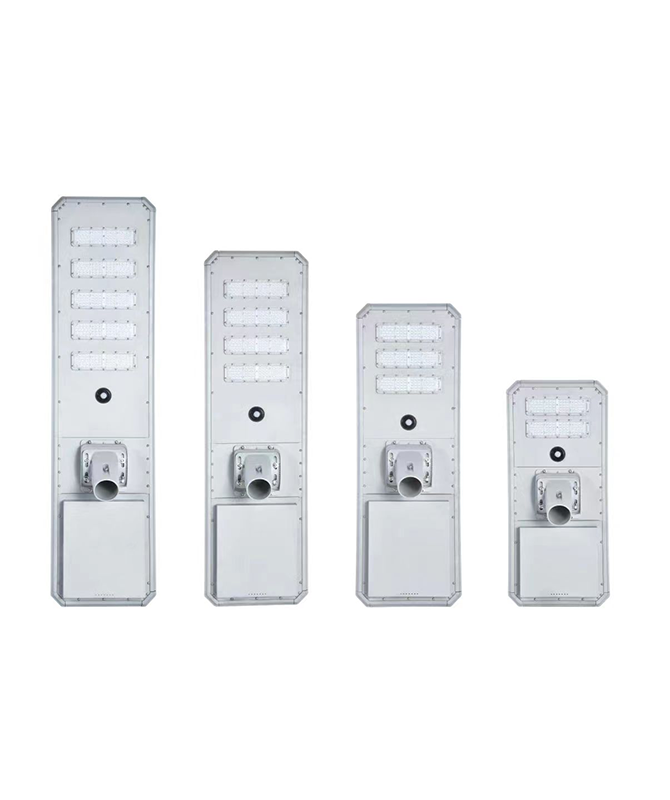
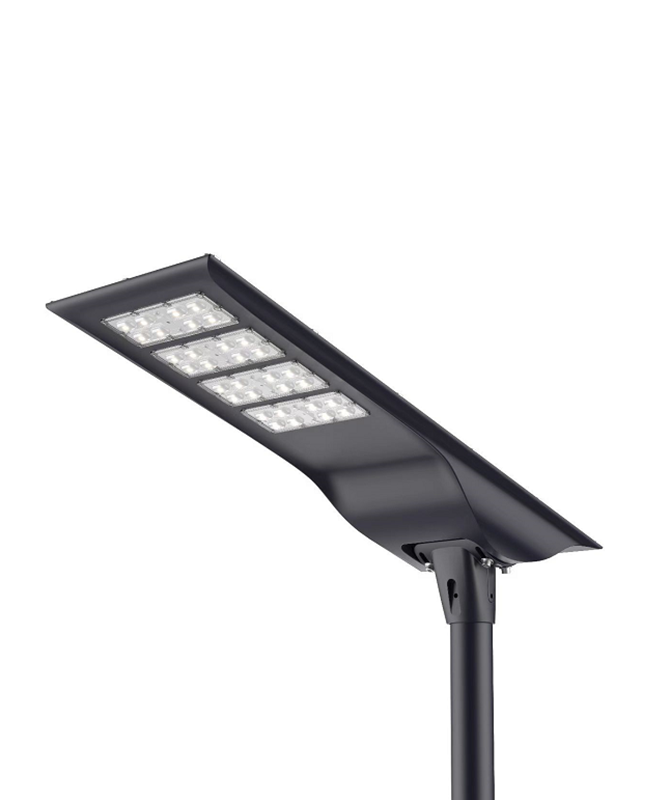
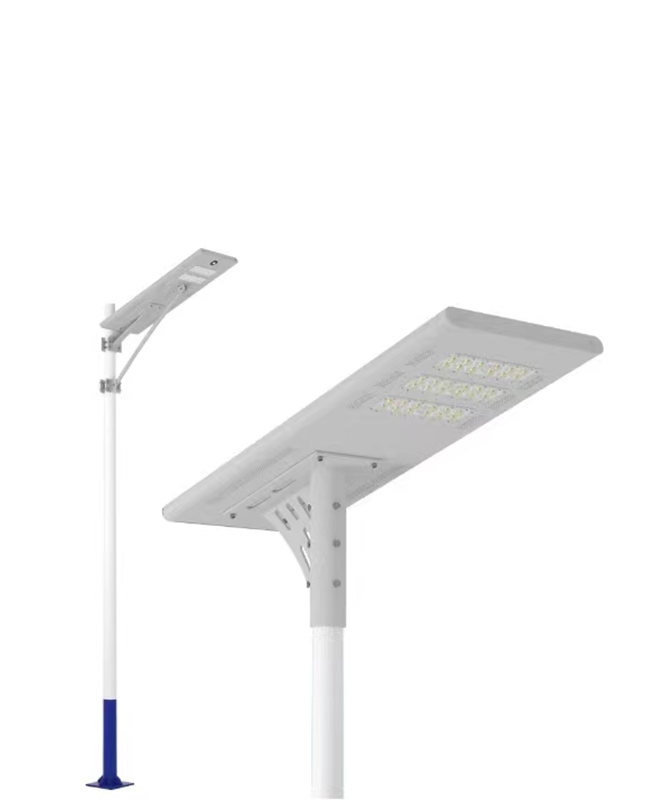
An integrated solar street light is a self contained outdoor lighting fixture that combines the solar panel, battery, LED light source, and control circuitry into a single compact unit mounted on top of a pole. Because every functional component lives inside one housing, these lights can be installed almost anywhere sunlight reaches, without trenching cables, connecting to the power grid, or relying on a separate battery box mounted lower on the pole. This guide explains exactly what integrated solar street lights are, how they work, how they differ from other types of solar lighting, and what to consider before choosing one for a road, pathway, parking lot, or rural area.
The word integrated in this context refers to the physical design philosophy behind the fixture. Rather than distributing the solar panel, battery, controller, and light source across separate parts connected by wiring, an integrated solar street light houses everything inside a single all in one unit, typically shaped like a flattened panel or slim rectangular head that sits at the top of a pole. This is different from older generation solar street lights, sometimes called split type solar street lights, where the solar panel sits on top of the pole, the battery is buried or mounted in a separate box partway down the pole, and cables run between the two.
Because an integrated unit contains its own solar panel, its own rechargeable battery, its own LED light engine, and its own charge controller and light sensor, the only external requirement is mounting the single unit onto a pole or wall bracket at a height and angle that allows the solar panel to receive adequate sunlight. There is no need to dig trenches for underground cabling, no separate battery compartment to secure against theft or tampering, and no need to connect to a municipal electrical grid at all.
Although the entire assembly fits into one compact housing, an integrated solar street light still contains all the same functional building blocks found in any solar lighting system. Understanding each component helps explain how the overall unit performs.
A photovoltaic panel is built directly into the top or front face of the fixture, usually using monocrystalline or polycrystalline silicon cells, angled to capture sunlight throughout the day and convert it into direct current electricity that charges the internal battery.
A built in battery, most commonly a lithium iron phosphate or lithium ion cell in modern units, stores the electricity generated during the day so the light has power available to run through the night. Older or lower cost integrated lights sometimes use sealed lead acid or nickel based batteries instead, which are heavier and generally shorter lived.
Light emitting diodes serve as the illumination source in essentially all modern integrated solar street lights, valued for their low power draw, long operational life, and ability to produce strong, even light output relative to the limited energy budget available from a solar battery.
A small built in circuit board manages the flow of electricity between the solar panel, the battery, and the LED, preventing overcharging of the battery during the day and controlling how the stored energy is released to the light at night, often including programmable settings for brightness levels and operating schedules.
Most integrated units include a built in light sensor that automatically switches the LED on at dusk and off at dawn without any manual intervention. Many models also include a motion sensor that can dim the light during periods of no activity and brighten automatically when a vehicle or pedestrian approaches, extending battery life across the night.
During daylight hours, the built in solar panel absorbs sunlight and converts it into direct current electricity through the photovoltaic effect. This electricity passes through the internal charge controller, which regulates the voltage and current flowing into the battery to charge it efficiently while protecting it from damage caused by overcharging, particularly important on long sunny days when the battery might otherwise reach full charge well before sunset.
As ambient light levels fall in the evening, the built in light sensor detects the drop in brightness and signals the controller to switch the LED on automatically. Because this activation is triggered by actual light levels rather than a fixed clock time, integrated solar street lights naturally adjust their operating schedule across the seasons, turning on earlier during winter evenings and later during long summer days without any manual reprogramming.
Throughout the night, the LED draws stored energy from the battery to produce illumination. Many integrated models use intelligent power management, running the LED at full brightness during peak activity hours in the early evening, then automatically stepping down to a lower brightness level in the middle of the night when pedestrian and vehicle traffic typically decreases, before returning to higher brightness again in the pre dawn hours. Motion activated models take this a step further, staying dim until a sensor detects nearby movement, then instantly brightening to full output for safety before dimming again once the area is clear.
As natural daylight returns, the light sensor again detects the change in ambient brightness and signals the controller to switch the LED off, allowing the solar panel to resume charging the battery and beginning the entire cycle again.
Solar street lights are generally grouped into a few distinct design categories, and understanding the differences helps clarify exactly what makes an integrated unit unique.
In a split type, sometimes called a separated type, system, the solar panel is mounted at the top of the pole, the LED light fixture is mounted just below it, and the battery is housed separately, often buried in an underground vault at the base of the pole or enclosed in a locked box partway up the pole structure. Cables run between these separated components. This design allows for larger battery capacity and larger solar panels since size is not constrained by a single compact housing, making split type systems common for lighting major highways or areas with limited winter sunlight where extra battery reserve is valuable.
An all in two design sits between split type and fully integrated designs. The solar panel and battery are combined into one unit mounted at the top of the pole, while the LED light fixture remains a separate component connected by a short cable just below. This offers some of the installation simplicity of an integrated design while allowing a somewhat larger solar panel and battery than a fully integrated unit can accommodate.
The fully integrated, or all in one, design places the solar panel, battery, LED, controller, and sensors into a single compact housing. This is the most compact and visually minimal option, the easiest to install, and generally the most affordable per unit, though it typically offers a smaller battery capacity and solar panel area compared to split type or all in two systems, which can be a limiting factor in regions with fewer hours of usable sunlight.
If you can point to a single compact unit at the top of a pole and say that is the entire light, panel, and battery, you are looking at an integrated solar street light. If there are visibly separate components connected by cables, you are looking at a split type or all in two system instead.
Because every functional component is pre assembled inside one housing at the factory, installing an integrated solar street light generally involves nothing more than mounting the unit onto a pole using a bracket, securing the pole into the ground or an existing foundation, and in many models simply turning on an internal power switch. There is no cable trenching between separate components, no need to dig a separate underground vault for a battery, and no need for a licensed electrician to connect the fixture to grid power, which dramatically reduces both the time and the cost required for installation compared to traditional grid connected street lighting or split type solar systems.
Because the light generates and stores its own power from sunlight, it operates completely independently of the electrical grid, eliminating ongoing electricity costs entirely and making integrated solar street lights particularly attractive for large scale deployment across many poles along roads, parking areas, or campus pathways, where the cumulative electricity savings compared to grid powered lighting can be substantial over years of operation.
Because integrated solar lights are not connected to the grid at all, they continue to function normally during grid power outages caused by storms, equipment failures, or other disruptions, which can be an important safety benefit for roads and public areas that need to remain lit even when surrounding buildings and grid connected street lights have lost power.
With fewer external cables, connectors, and separate enclosures, integrated units generally have fewer points of potential failure or water intrusion compared to split type systems, and LED light sources themselves require very little maintenance over their operational life compared to older lighting technologies such as high pressure sodium or metal halide lamps.
Because there is no separate underground battery vault or exposed cabling between components, integrated solar street lights largely eliminate a problem that has affected some split type and grid connected lighting installations in certain regions, namely the theft of copper cabling or battery equipment from accessible enclosures along a roadway.
Because the entire system runs on solar energy rather than grid electricity, which in many regions is still generated partly from fossil fuels, integrated solar street lights produce no direct carbon emissions during operation and reduce overall demand on the electrical grid, particularly valuable for large scale public lighting projects aiming to reduce their environmental footprint.
Because the solar panel and battery are constrained by the compact size of the integrated housing, these units generally offer less energy storage capacity than split type systems with larger, separately mounted panels and batteries. This can be a meaningful limitation in regions with fewer hours of strong sunlight, extended periods of cloudy weather, or applications requiring very high brightness output running for many consecutive hours each night.
Additionally, because the battery sits at the top of the pole inside the same housing as the solar panel and LED, it is exposed to greater temperature fluctuation from direct sun exposure compared to a battery buried underground or shielded within a separate enclosure lower on the pole, which can affect battery lifespan over time in particularly hot climates. Replacing a failed battery in some integrated designs also requires accessing the entire sealed unit at the top of the pole, which can be somewhat less convenient than accessing a ground level battery box in a split type system.
Wattage describes how much power the LED consumes, while lumen output describes the actual amount of visible light produced. Because LED efficiency varies between manufacturers and product lines, comparing lumen output directly, rather than relying on wattage alone, gives a more accurate picture of how bright a given fixture will actually appear once installed.
Battery capacity, usually measured in amp hours or watt hours, determines how many nights of operation the light can sustain, particularly important during stretches of cloudy weather when the solar panel cannot fully recharge the battery each day. Lithium iron phosphate batteries have become the preferred choice in most modern integrated solar street lights due to their long cycle life, strong performance across a wide temperature range, and improved safety characteristics compared to older lithium ion chemistries or traditional lead acid batteries.
Monocrystalline solar panels generally offer higher efficiency in a smaller physical area compared to polycrystalline panels, which can matter significantly in an integrated design where panel size is limited by the compact housing. Panel wattage, combined with the expected average sunlight hours for a given installation location, determines how reliably the battery will be recharged to full capacity each day.
Because integrated solar street lights are permanently installed outdoors and exposed to rain, dust, and temperature extremes, checking the ingress protection rating, commonly written as an IP rating followed by two digits, helps confirm how well sealed the unit is against water and dust intrusion. Most quality outdoor rated integrated solar lights carry a rating of IP65 or higher, indicating strong protection against both dust and low pressure water jets from any direction.
Many modern integrated units include passive infrared motion sensors that allow the light to run at a reduced brightness level, sometimes as low as ten to thirty percent of full output, during quiet periods of the night, then instantly increase to full brightness when motion is detected nearby. This feature can significantly extend how many nights the battery can sustain useful illumination, particularly valuable for installations in regions with limited average sunlight.
| Factor | Integrated Solar Street Light | Traditional Grid Powered Light |
|---|---|---|
| Installation Cost | No trenching or grid connection needed, generally lower | Requires cable trenching and grid connection, generally higher |
| Ongoing Electricity Cost | None, powered entirely by sunlight | Continuous electricity cost from the grid |
| Performance During Outages | Unaffected by grid power outages | Goes dark during grid outages |
| Installation Location Flexibility | Very flexible, works anywhere with sunlight | Limited to areas near existing grid infrastructure |
| Weather Dependent Performance | Can be affected by extended cloudy periods | Unaffected by weather conditions |
The single biggest factor affecting how reliably an integrated solar street light performs is the average number of peak sunlight hours available at the installation site throughout the year. Regions closer to the equator or with consistently clear skies generally see much more reliable performance from integrated units than regions with long winters, frequent cloud cover, or significant seasonal variation in daylight hours.
Even a well specified integrated unit will underperform if it is mounted in a location where nearby trees, buildings, or other structures cast shadows over the solar panel for significant portions of the day. Proper orientation toward the direction that receives the most consistent sunlight, typically south facing in the northern hemisphere and north facing in the southern hemisphere, is essential for reliable charging.
Battery performance and lifespan are both affected by temperature extremes. Very high ambient temperatures can accelerate battery degradation over time, while very low temperatures can temporarily reduce the effective capacity a battery can deliver on any given night, both factors worth considering when selecting a unit rated appropriately for the climate of the installation site.
Dust, pollen, bird droppings, and other debris settling on the solar panel surface over time can meaningfully reduce charging efficiency if not periodically cleaned, particularly in dry, dusty environments or areas near heavy vehicle traffic.
Although integrated solar street lights require significantly less maintenance than traditional grid connected fixtures, a small amount of periodic upkeep helps maximize performance and lifespan.
Many integrated solar street lights include a small physical switch or remote control that allows installers to temporarily turn the unit off during shipping, storage, or initial installation, ensuring the battery is not drained unnecessarily before the light is actually put into service.
While the upfront cost of an integrated solar street light is often higher per unit than a comparable conventional fixture alone, the total cost comparison changes significantly once installation and ongoing operating costs are included. Traditional grid powered street lighting requires trenching, cabling, transformers in some cases, and a continuous electricity bill for the entire operational life of the fixture, while an integrated solar unit requires only a one time purchase and straightforward mounting, with no further electricity costs at all going forward.
For large scale projects lighting many kilometers of road or large parking areas, the elimination of trenching costs alone can offset a substantial portion of the higher per unit price of solar fixtures, and the complete absence of ongoing electricity bills typically allows the total cost of an integrated solar lighting project to become more favorable than a grid connected alternative within a period of several years, with the exact timeline depending on local electricity rates, installation costs, and the specific fixtures chosen.
While extended periods of heavy cloud cover do reduce charging efficiency, modern integrated units with efficient monocrystalline panels and lithium iron phosphate batteries are generally designed with enough reserve capacity to continue operating through several consecutive cloudy days, particularly when paired with motion activated dimming features that conserve battery power during low activity hours.
Early generations of compact solar lighting sometimes struggled to match the brightness of traditional street lighting, but modern integrated units using high efficiency LEDs and well designed optics can produce lumen output comparable to many traditional fixtures, making them suitable for genuine roadway and pathway lighting applications rather than purely decorative use.
While battery replacement in an integrated unit does require accessing the sealed housing at the top of the pole, most reputable manufacturers design their products with eventual battery replacement in mind, and a well maintained integrated solar street light can often see its battery replaced once during its overall service life, extending the useful lifespan of the fixture considerably beyond the life of a single battery.
Ongoing improvements in solar cell efficiency, LED performance, and battery energy density continue to push integrated solar street lights toward brighter output, longer battery life, and smaller physical footprints. Smart connectivity features are also becoming more common, with some newer integrated units incorporating wireless communication that allows a central management system to monitor battery health, adjust brightness schedules remotely, and receive alerts about maintenance needs across an entire network of lights, turning what was once a simple standalone fixture into part of a broader connected infrastructure system for municipalities and large campuses managing many lighting points at once.
Solar powered outdoor lighting has existed in various forms since photovoltaic technology first became commercially viable for small scale applications in the latter half of the twentieth century. Early solar lighting products were often bulky, expensive relative to their light output, and limited by the relatively low efficiency of early solar cells and the short lifespan of the rechargeable batteries available at the time. As LED technology matured and became dramatically more efficient starting in the early two thousands, and as lithium battery technology improved in both capacity and safety, the practical case for solar powered street lighting strengthened considerably.
The specific shift toward fully integrated, all in one designs is a more recent development within this broader solar lighting trend, driven by advances in compact high efficiency solar cells that can generate meaningful power even from a relatively small panel area, along with improvements in LED optics that allow a single compact light engine to distribute illumination effectively across a roadway or pathway. What once required a large panel and a separately housed battery to achieve useful brightness can now often be accomplished within a single streamlined unit, which has driven rapid adoption of integrated designs across many types of outdoor lighting projects worldwide.
Because integrated solar street lights are installed as permanent public infrastructure in many cases, a number of quality and safety standards are commonly referenced when specifying or purchasing these fixtures for larger projects.
Many regions maintain lighting standards that specify minimum illumination levels for different types of roads, pathways, and public spaces, often measured in terms of average lux or footcandle levels across the lit area. When specifying integrated solar street lights for a public project, confirming that the chosen fixture's lumen output and beam distribution pattern can meet these local photometric requirements is an important step, since underpowered fixtures may technically illuminate an area while still falling short of established safety guidelines for roadway or pedestrian lighting.
Because lithium based batteries carry some risk of thermal issues if poorly manufactured or damaged, reputable integrated solar street light products typically carry recognized battery safety certifications confirming that the battery cells and battery management circuitry have been tested against established safety benchmarks for overcharge protection, short circuit protection, and thermal stability.
Poles supporting integrated solar street lights, particularly larger units with bigger solar panels acting as wind sails, are often rated for specific wind load tolerances, which is an important consideration for installations in regions prone to strong storms or hurricanes, where a fixture rated for calmer conditions elsewhere might not be appropriate without additional structural reinforcement.
In many parts of the world where extending the electrical grid to remote villages or rural roadways would be prohibitively expensive, integrated solar street lights have become a practical way to bring basic nighttime lighting and improved road safety to communities that would otherwise have no illumination after dark. Because these projects often involve installing dozens or hundreds of individual poles across a wide geographic area, the simplified, cable free installation process associated with integrated units offers a significant practical advantage over both traditional grid extension and split type solar systems requiring underground cabling at every pole.
Following natural disasters that damage electrical infrastructure, integrated solar street lights can be deployed relatively quickly to restore basic nighttime lighting to affected roads and public spaces without waiting for grid power to be fully repaired, since each unit operates entirely independently once installed.
Municipalities pursuing broader sustainability and smart city goals have increasingly incorporated integrated solar street lights into pilot programs and larger rollouts, both for the direct energy savings they provide and as a visible demonstration of renewable energy adoption within public infrastructure projects, sometimes paired with the smart connectivity features described earlier that allow centralized monitoring of an entire network of lights.
Evaluating the true cost of an integrated solar street light against alternative lighting options requires looking beyond the initial purchase price alone. A complete cost comparison typically accounts for the upfront fixture and pole cost, installation labor and any trenching or cabling expenses, ongoing electricity costs where applicable, expected maintenance expenses over the fixture's operational lifespan, and the anticipated cost and timing of any component replacement, such as a battery, partway through that lifespan. When all of these factors are considered together across a period of ten to fifteen years, integrated solar street lights frequently demonstrate a favorable total cost of ownership compared to grid connected alternatives, particularly for installations located any meaningful distance from existing grid infrastructure, where the cost of extending power lines alone can be substantial.
For anyone planning a larger deployment of integrated solar street lights, whether for a private development, a municipal project, or a rural electrification initiative, asking a supplier a focused set of questions before committing to an order can prevent costly mismatches between product specifications and actual site conditions.
Working through these questions with a supplier before finalizing a purchase helps ensure that the integrated solar street lights selected for a project will perform reliably under the actual sunlight, temperature, and usage conditions of the intended location, rather than only under the ideal laboratory conditions often used in marketing specifications.
What makes a solar street light integrated rather than split type
An integrated solar street light combines the solar panel, battery, LED, controller, and sensors into a single compact housing, while a split type light has these components mounted separately and connected by cables.
How many hours can an integrated solar street light run at night
Runtime depends on battery capacity, LED wattage, and brightness settings, but many modern integrated units are designed to provide reliable dusk to dawn operation, often eight to twelve hours or more, particularly when combined with motion activated dimming to conserve battery power.
Do integrated solar street lights work during winter
Yes, though reduced daylight hours and lower sun angles during winter months typically mean less charging time each day, which is why selecting a unit with adequate battery reserve capacity is especially important for locations with significant seasonal variation in sunlight.
How long does the battery in an integrated solar street light typically last
Lithium iron phosphate batteries commonly used in modern integrated units are often rated for several years of daily charge and discharge cycles before their capacity noticeably declines, though actual lifespan varies based on climate, usage patterns, and battery quality.
Can integrated solar street lights be used on tall highway poles
Integrated units are most commonly used on standard height road, pathway, and parking lot poles, while very tall highway poles requiring extremely high lumen output over long distances more often use split type or all in two systems that can accommodate larger solar panels and batteries.
Are integrated solar street lights more expensive than traditional street lights
The upfront fixture cost is often higher, but when installation costs and the complete absence of ongoing electricity bills are factored in, integrated solar street lights frequently become more cost effective than traditional grid powered lighting over the total lifespan of the installation.
An integrated solar street light offers a genuinely simple answer to outdoor lighting in locations where running grid power is expensive, impractical, or simply unnecessary. By combining the solar panel, battery, LED, and control electronics into one compact, weatherproof housing, these fixtures eliminate the trenching, wiring, and ongoing electricity costs associated with traditional street lighting while remaining resilient during power outages and requiring only minimal maintenance over their operational life. Understanding how the components work together, what specifications matter most, and where the design trade offs lie compared to split type systems makes it much easier to choose the right integrated solar street light for a specific road, pathway, parking area, or rural lighting project.

 +86 150 6287 9911
  [email protected]
  Yangling Road Industrial Concentration Zone, Songqiao Town, Gaoyou City, JIangsu, China.
 Copyright © Yangzhou Shangyuan Intelligent Transportation Technology Co., Ltd. All Rights Reserved.
Wholesale Intelligent Streetlight Manufacturers Privacy