Drive along a typical arterial road and count the vertical structures: a wooden distribution pole carrying power lines, a steel lighting mast a few meters away, a signal pole at the intersection, and a camera pole further down the block. Each one was designed in isolation, each consumed its own permits and right-of-way space, and every new service added another. A joint pole exists to end that repetition. In plain terms, a joint pole is a single structure owned by one party, commonly the electric utility that installed it, which also carries the equipment of other licensed parties under written attachment agreements. The payoff is measurable: lower capital cost per new connection, faster deployment for fiber and wireless operators, and cleaner streetscapes. The risk is just as concrete: every attachment adds weight and wind area, so a pole that was safe on installation day can drift toward overload as agreements accumulate. Joint use succeeds or fails on loading analysis, defined space zones, and disciplined paperwork, not on the pole itself.
Two conditions define a joint pole, and they appear in nearly every pole attachment license: one owner, multiple users. The owner, typically the electric utility, retains responsibility for the structural integrity of the pole, while each attacher licenses space for its own facilities: telephone and fiber optic cables, coaxial lines, and in many cities municipal equipment such as traffic signal interconnects, monitoring cameras, and wayfinding signage.
Contracts and standards assign each category its own vertical zone. On a typical distribution pole, the supply space sits near the top with the owner's conductors and transformers; below it, a communication space is reserved for low-voltage attachments, separated by a fixed vertical distance, commonly around 40 inches or roughly one meter in North American practice, so that workers on either system are not expected to share a climbing position. Attachers are also barred from wrapping equipment continuously around the pole, because that would block climbing space and future maintenance work.
This zoning matters for traffic projects in particular. A signal interconnect cable or a camera can share the structure legally, but only inside the communication space and only after the owner's engineering review confirms that the added load fits.
The process is procedural rather than technical, and knowing its steps helps you predict where a project will lose time.
The slow points are rarely the attachment itself. They are the paperwork: poles that turn out to be full, replacements that force every attacher to move in a coordinated transfer, and undocumented attachments discovered in audits that consume space nobody budgeted for. Anyone planning signal, camera, or signage work on existing poles should therefore request a current joint use inventory before committing to a design.
The model keeps expanding because the economics work from every seat at the table.
The owner, in turn, collects attachment fees that fund inspection and maintenance, so the structure that carries more equipment also gets watched more closely.
The controlling question is always cumulative load. A shared pole must resist wind, and ice where it occurs, acting on the pole itself plus every conductor, cable, and bracket attached to it. A new fiber cable or camera head increases the projected wind area, and several small additions together can exceed the margin the original design left behind. Shared structures are therefore normally engineered to a higher construction grade than comparable single-use poles, and every application triggers recalculation rather than a visual judgment.
On steel traffic and lighting structures, the same logic extends to corrosion and fatigue. Hot-dip galvanizing protects the base steel, but welds, bolt holes, and the ground-line zone remain common points of attack, and coastal air or de-icing salt shortens every maintenance interval. Wind and the turbulence created by heavy vehicles at intersections work bolted joints loose over the years, which is why torque checks and base-flange inspections belong in any joint use maintenance plan. Our guide to preventing structural damage to signal light poles caused by vibration and metal fatigue covers that mechanism in detail.
Sharing also raises electrical questions that a single-purpose pole does not typically face. Grounding must bond the structure reliably, lightning protection has to be engineered in rather than assumed, and every cable entry needs a sealed access door with a drip loop designed to keep rain from reaching the equipment compartment.
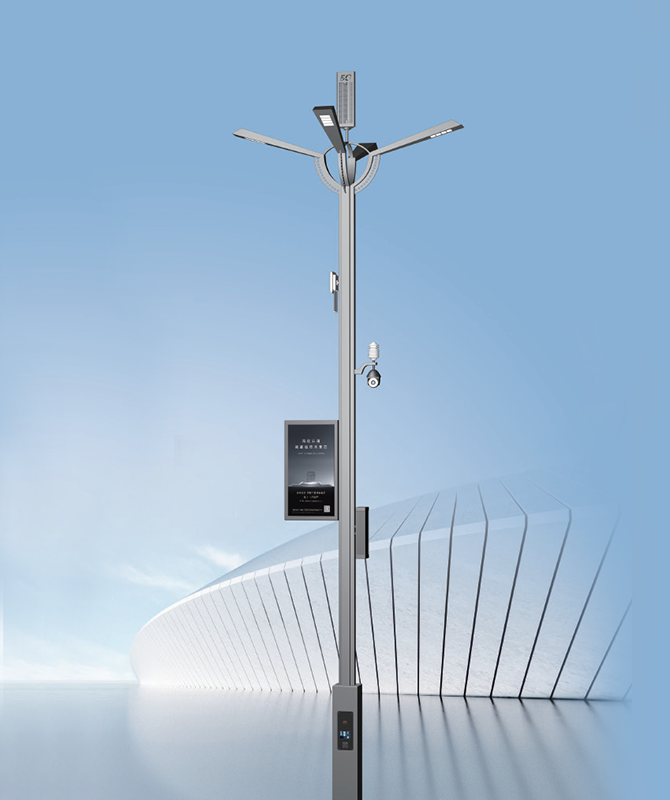
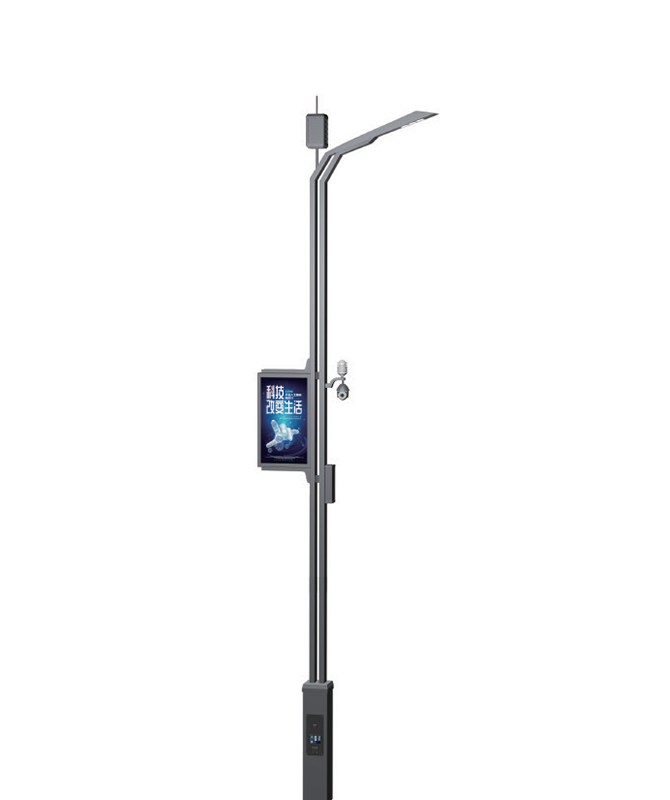
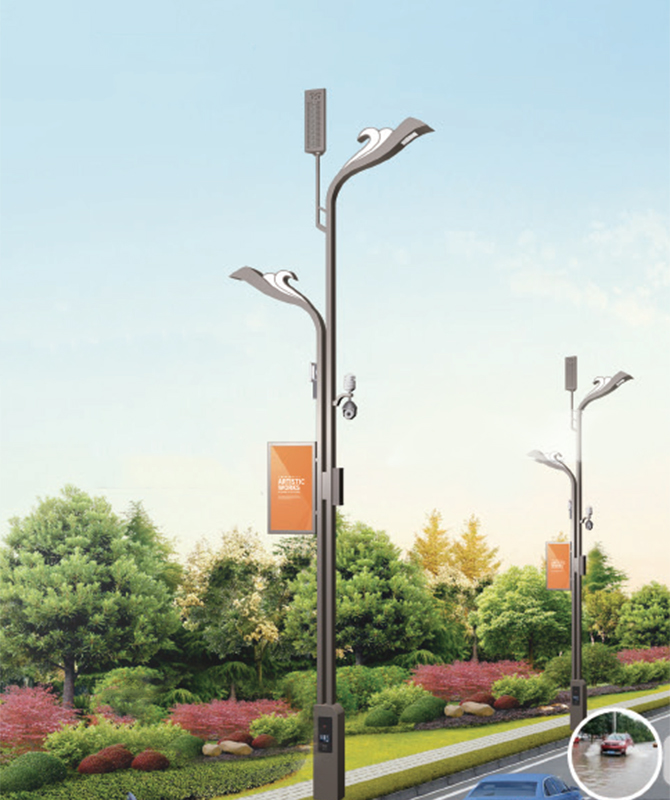
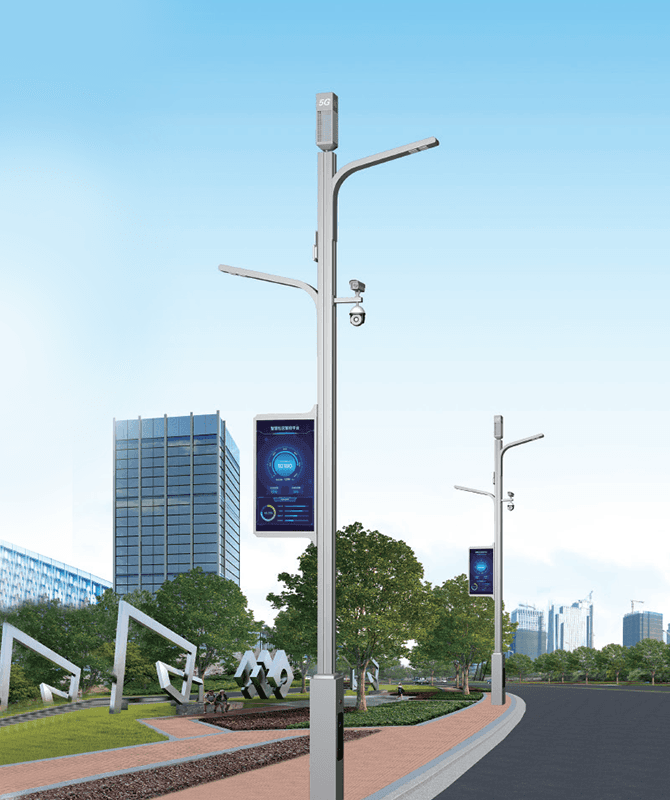
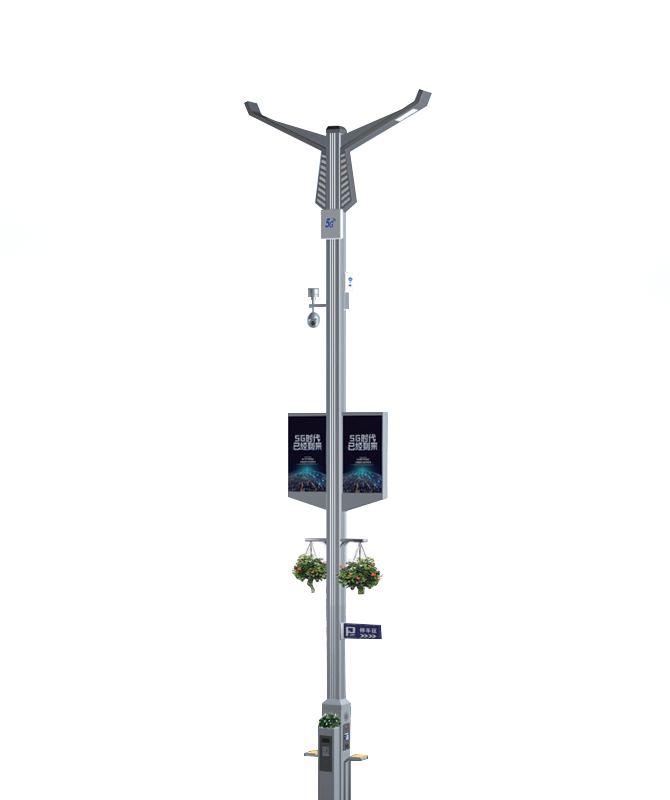
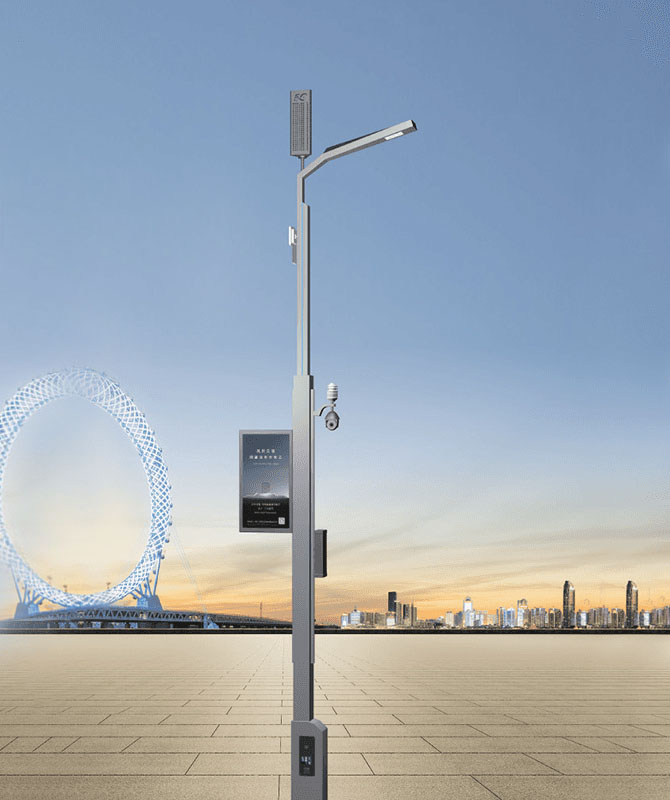
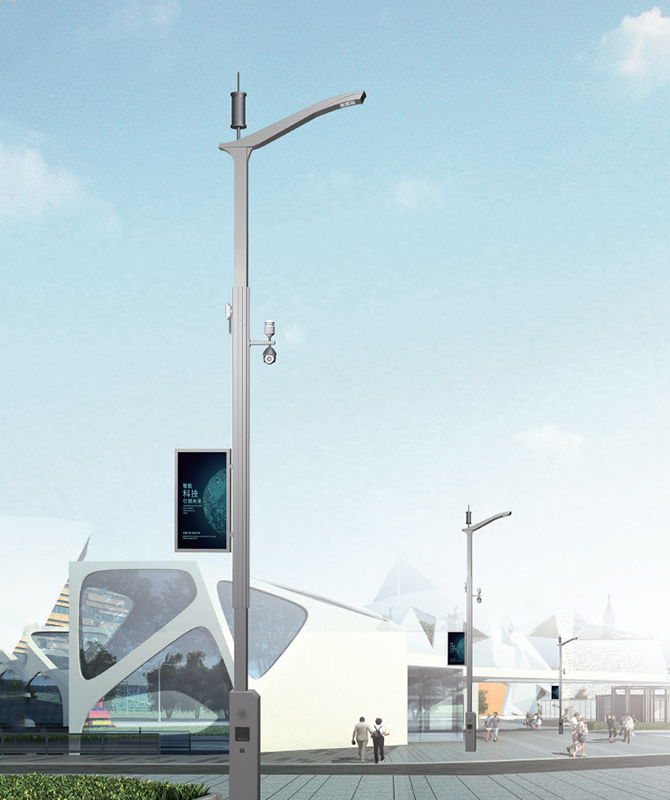
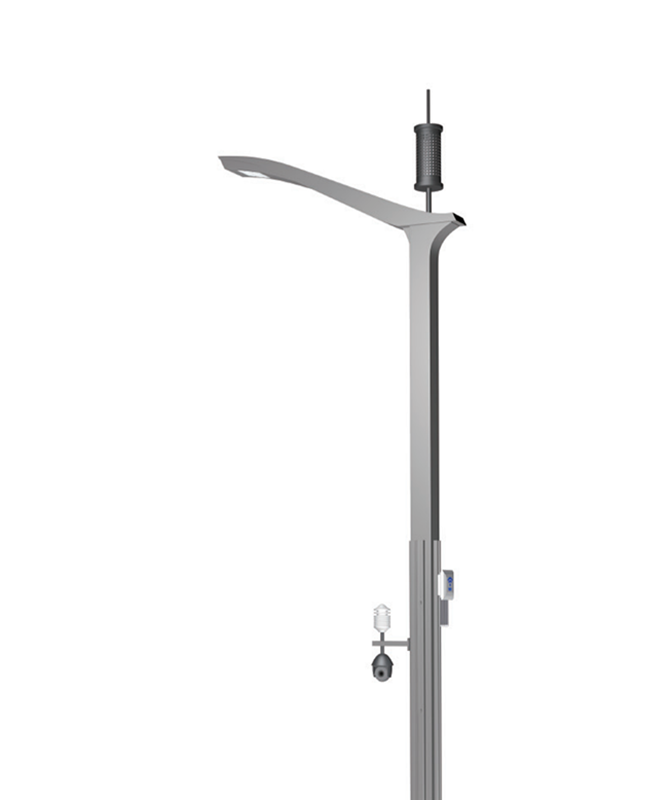
Joint use solves sharing after the fact, one application at a time. A multi-function comprehensive pole solves it at the design stage. Instead of bolting equipment onto a structure sized years earlier, an integrated pole is engineered from the initial drawing to carry street lighting, signal heads, monitoring cameras, illuminated signage, environmental sensors, and communication equipment on one steel body, with a published load budget and a defined space plan for every function.
The difference shows up at procurement. A planned multi-function pole reserves spare load capacity, with 20 to 30 percent a practical target, plus spare mounting positions for future attachers, routes cabling internally through sealed channels, and standardizes bracket interfaces so that adding a camera or a sign later does not require re-engineering the structure. A retrofitted joint pole inherits whatever margin the original designer happened to leave, which may be none.
Our product line follows this integrated logic: signal light poles, traffic monitoring poles, and smart multi-function comprehensive poles are built on the assumption that lighting, signal, and sensing equipment will share one structure, with hot-dip galvanized steel, internal cable routing, lockable inspection doors, and grounding and lightning protection specified as standard rather than as options.
Before signing an attachment agreement or ordering structures for a shared corridor, put the following points on the table.
| Structure model | Ownership and control | Loading logic | Suited To |
|---|---|---|---|
| Single-purpose pole | One utility or agency, one service | Sized for its own load only | Dedicated runs and rural feeders |
| Joint use pole | One owner with licensed attachers | Recalculated at every application | Existing corridors with fiber or wireless demand |
| Multi-function smart pole | Project owner or municipality | Load budget fixed at design, with spare capacity | New intersections and smart city corridors |
A joint pole is ultimately less a product than a discipline: one structure, one owner, several tenants, and agreements that keep load, clearance, and responsibility explicit. Apply that discipline to an existing corridor and you cut cost and clutter; build it into a multi-function pole from the start and you also bank capacity for whatever technology arrives next. If your intersection or corridor project needs lighting, signals, and monitoring to share one structure, send us your equipment list and drawings for a configuration proposal and a detailed quote.
+86 150 6287 9911
[email protected]
Yangling Road Industrial Concentration Zone, Songqiao Town, Gaoyou City, JIangsu, China. Copyright © Yangzhou Shangyuan Intelligent Transportation Technology Co., Ltd. All Rights Reserved.
Wholesale Intelligent Streetlight Manufacturers

Privacy