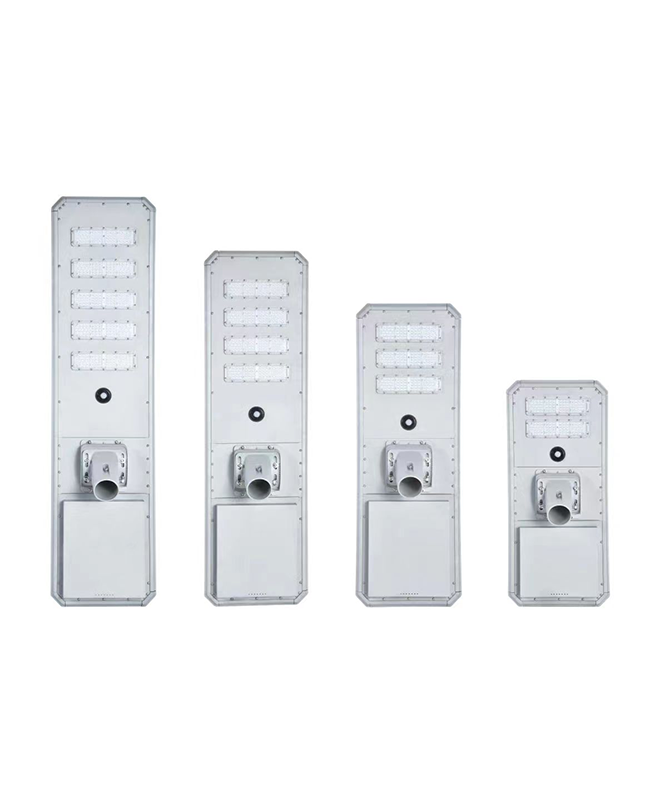
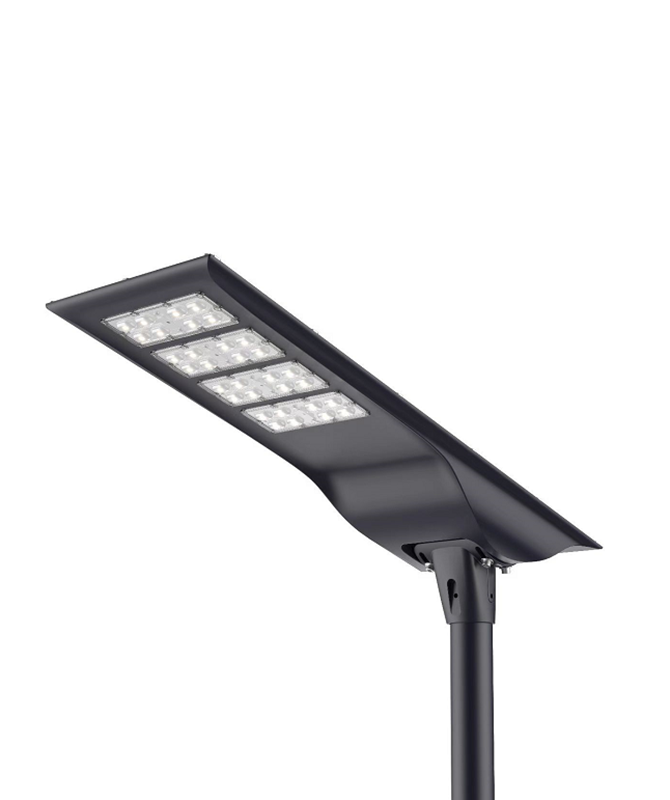
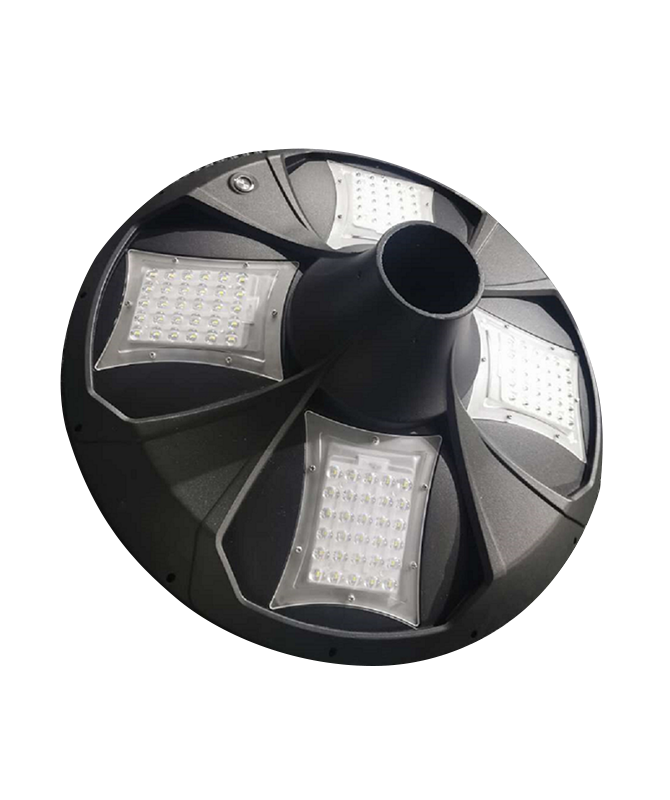
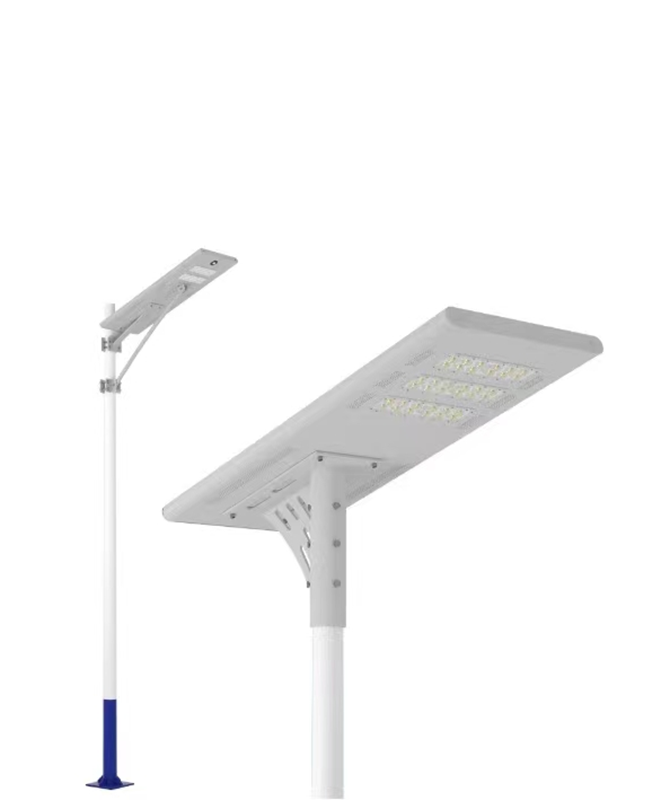
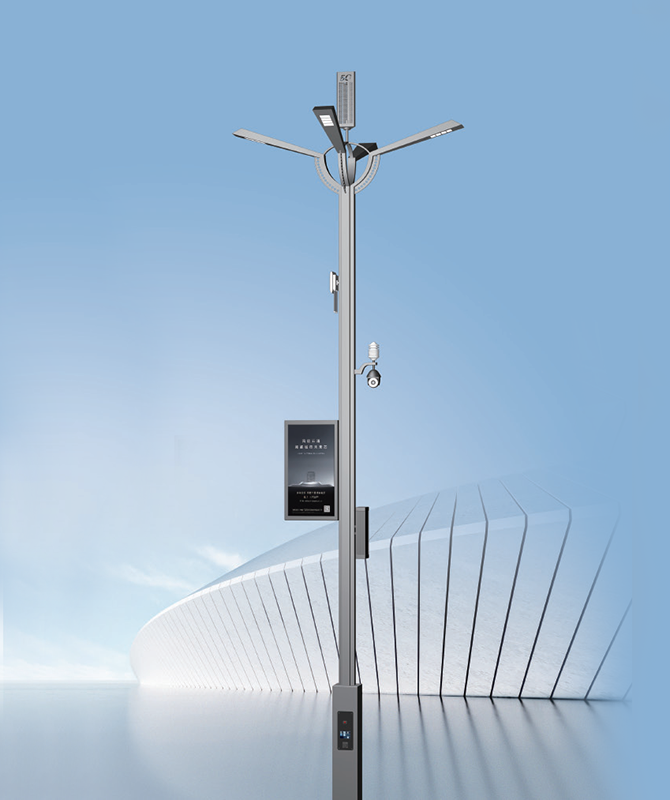
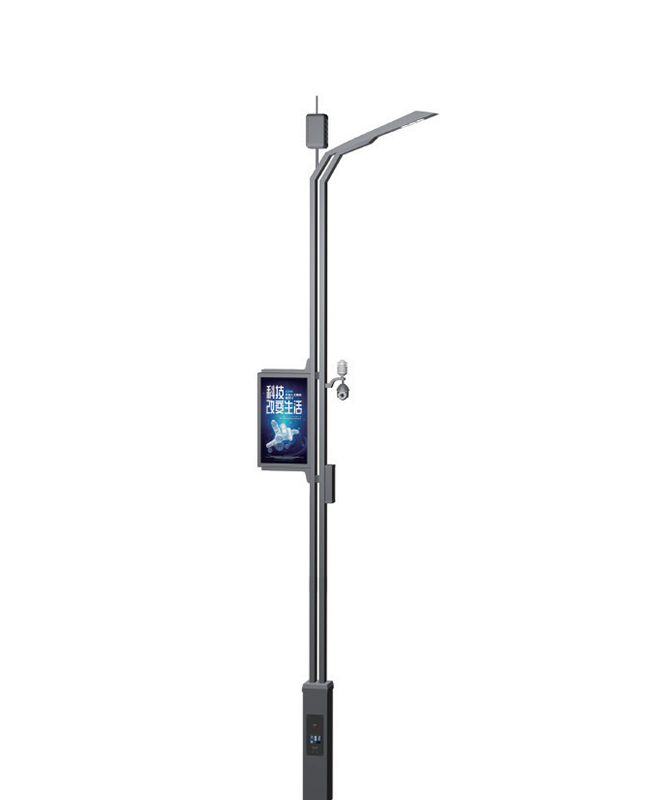
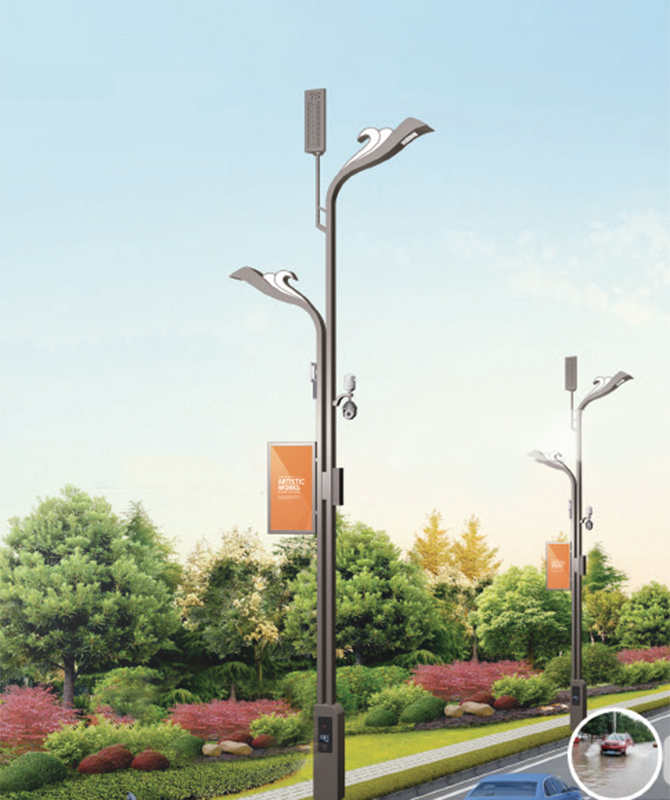
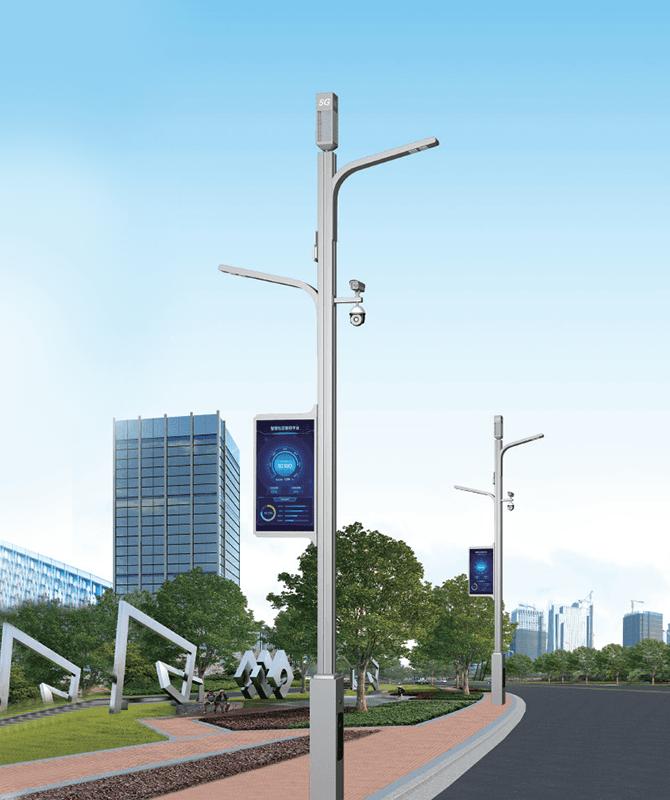
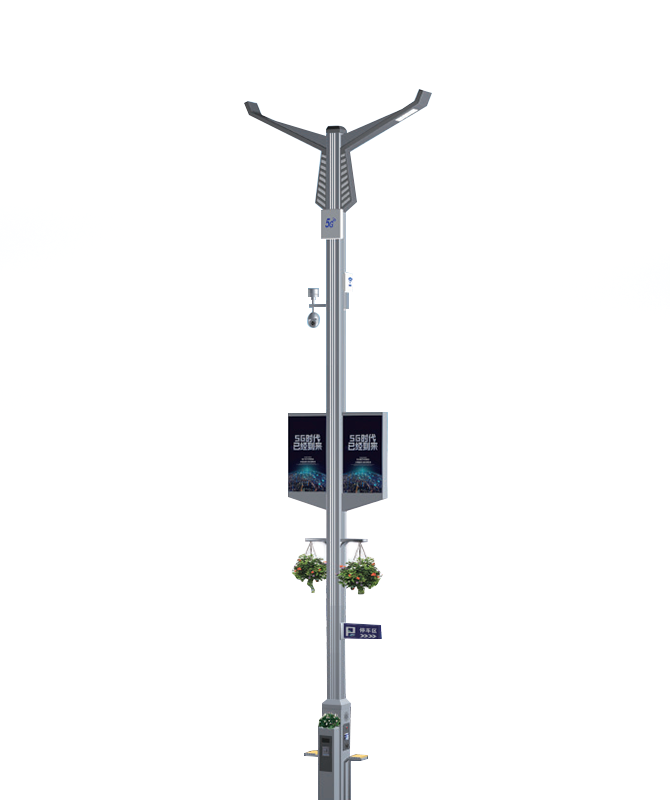
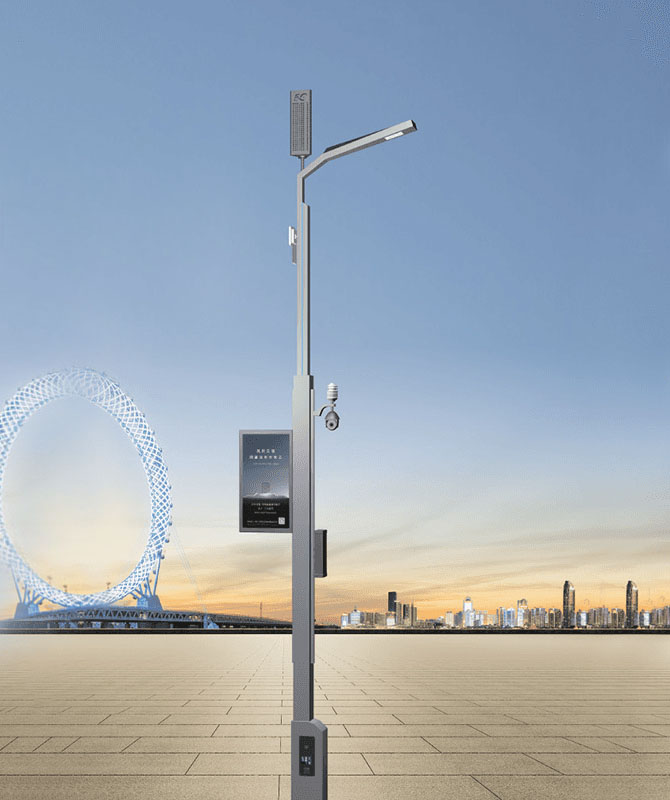
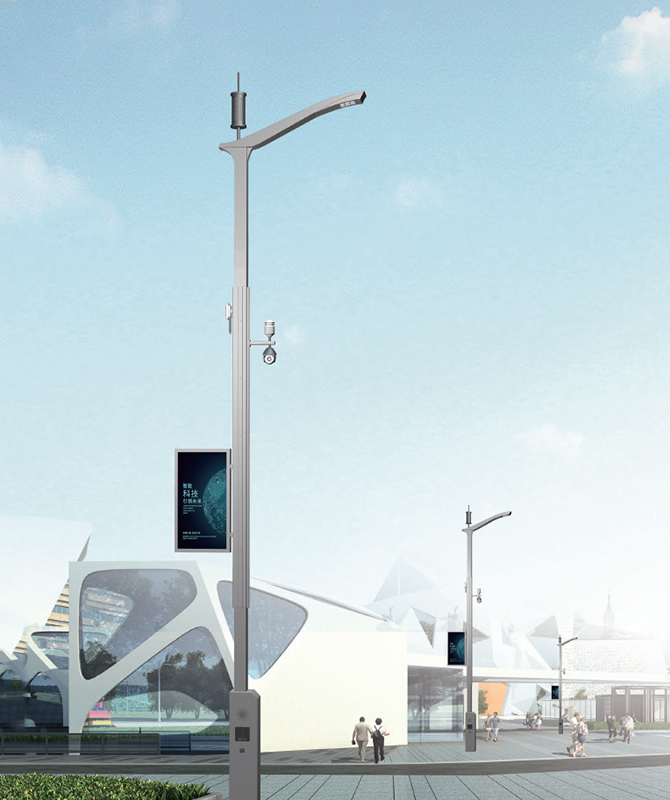
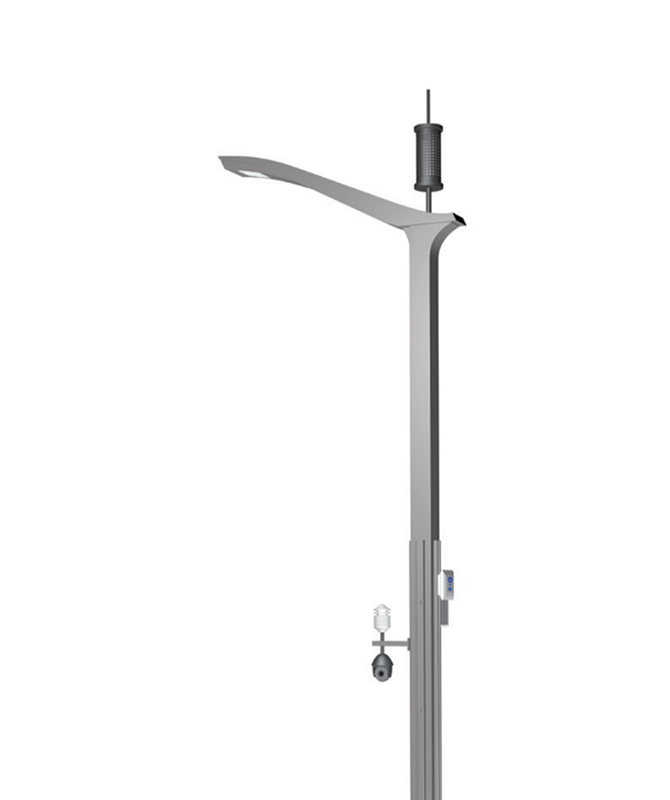
A smart street lighting system is often described as a lighting network with a brain. In practice it is a stack of ordinary things done carefully: a good luminaire, a driver that dims cleanly, a node controller that knows where it is and what time it is, a network that stays connected, and software that tells an operator the truth about what is happening at two in the morning on a road nobody is driving on.
Most of our working hours sit on the hardware side of that stack — luminaires, poles, signal heads — so this article is written from the perspective of people who spend their days with dust, salt spray and voltage dips rather than dashboards. Software matters enormously. But software can only manage the hardware it is given.
A street that switches on at dusk and off at dawn on a timer is automatic, not smart. For a system to deserve the word, three capabilities have to be present at the same time. It has to sense something — traffic, ambient light, current draw, a fault. It has to communicate what it sensed. And it has to act on it: dim, raise an alarm, open a work order, or simply report.
Take away any of the three and you are left with a remote switch. Most of the practical value lives in the overlap. A presence sensor that reduces output on a quiet arterial at midnight usually pays back faster than swapping the luminaire itself, because it attacks the hours where nothing is being lit for anybody. A fault alarm cuts outage time, because the crew leaves the depot already knowing which spare part to bring instead of guessing at the base of the pole.
Everything starts with the fixture. A useful smart system begins with a luminaire that is already efficient: competent LEDs, a distribution matched to the road width and mounting height, and optics that keep glare away from drivers. If the photometry is poor, no amount of dimming rescues it. Dimming range matters as much as dimming capability. Many drivers will go to ten percent, but far below that the efficiency collapses or the output becomes unstable. If deep late-night reduction is part of the plan, confirm that behaviour before the specification is frozen, not after the poles are up.
The node controller is where the real work happens. It handles the switching schedule, the dimming profile, sensor inputs, energy metering and fault reporting. On the sensing side there is one trap nearly every project meets: passive infrared or microwave detection tuned for vehicles will miss cyclists and pedestrians, or trip on branches, rain and parked cars. Combining a fast sensor with a slower reference — ambient light level, a time window, a traffic calendar — is usually more effective than trying to make the sensor itself cleverer. Rejecting false triggers is a design decision, not a sensitivity setting.
The platform should answer four questions without ceremony: which lights are on, which are off, how much energy did each one use, and who is going to fix the broken one. Beyond that it becomes a GIS and asset register, which is useful but secondary. Interface elegance is not a priority; a maintenance workflow that operators actually follow is.
Savings arrive from three places, and it helps to rank them honestly. The first is the LED conversion itself, which usually delivers the largest single block. The second is removing over-lighting — trimming output to what the road actually needs, typically somewhere between twenty and forty percent depending on the traffic curve. The third is operations: remote metering, alarms and dispatch tracking reduce truck rolls and labour hours rather than kilowatt hours.
For a fuller breakdown, our comparison of smart street light energy consumption against traditional lighting separates the savings by source rather than presenting one headline number.
That distinction matters because headline numbers travel badly. A figure of seventy percent occasionally appears in supplier material, and it is almost always a stack of effects: replacing old mercury vapour lamps, cutting lighting levels hard, and counting avoided maintenance in the same total. A defensible figure names its sources one by one and states the baseline it is measured against.
Communications is the part of a smart street lighting system that looks simple in a demonstration and complicated in a real corridor. There is no single best medium; most mature deployments end up with a mixture, typically one approach along a trunk road and another for scattered feeders.
| Option | Where it fits | What to watch in practice |
|---|---|---|
| Power line carrier | Continuous corridors with clean, modern cabling | Transformers and electrical noise split the network; commissioning needs patience |
| Short-range radio mesh | Dense urban blocks with plenty of nodes | Range and foliage affect links; redundancy needs enough nodes to route around a failure |
| Low-power wide area network | Rural roads and long spans with few aggregation points | Duty-cycle limits mean infrequent reporting; plan for gracefully degraded control |
| Cellular modules | Isolated poles and corridors with no gateway coverage | Subscription and provisioning become a recurring operating cost, not a one-off purchase |
The practical rule is to design for the weakest link. If a segment loses its backhaul, the lights should keep following a local schedule and dimming profile rather than sitting at full output or going dark. Autonomy at the edge is what separates a resilient installation from one that fails visibly the first time a concentrator loses power.
Residents notice glare long before they notice that a controller has been installed. Optics that keep light on the road instead of in windscreens, uniformity that avoids alternating bright and dark pools, and a colour temperature around 3000 K for most urban roads will do more for public acceptance than any dashboard. Perceived safety follows the same logic: a footpath lit evenly at a modest level feels safer than one with bright patches and deep shadows between poles.
Dimming also needs a floor. Reducing output during low-traffic hours is sensible, but the level has to be set from measured illuminance on the surface, not from a percentage typed into a configuration file. A road that was over-lit at commissioning can be cut deeply; one that was already marginal cannot.
Smart lighting rarely stands alone. At an intersection the same structure often carries signal heads, pedestrian units, countdown displays, cameras and signage. That integration is genuinely valuable — fewer poles, less excavation, a cleaner streetscape — but it loads the structure and complicates access for maintenance. Wind loading, service platforms and cable routing all need to be resolved at design stage, not when the crane is already on site.
Because we build luminaires and poles alongside the equipment that keeps junctions working, we see the family resemblance between lighting intelligence and traffic intelligence. Both depend on stable power, self-diagnosis and predictable failure. A signal controller dropping into an all-yellow flashing state when it loses communication is a well-established fallback; a lighting network deserves an equally explicit answer to the question of what it does when the network disappears. Active warning signs mounted on lighting columns inherit the same exposure and the same power budget, so they are worth considering in the same design pass rather than as an afterthought.
Field reliability is decided by unglamorous details. Ingress protection ratings need to reflect real installation practice, not a laboratory sample with a perfect gasket. Surge protection matters on any column that shares a supply with other equipment, and it matters most where lightning is seasonal but predictable. Coastal and industrial sites add salt and chemical attack, which makes hot-dip galvanising and coating quality a structural decision rather than a finish choice. Vibration and metal fatigue deserve attention wherever heavy heads sit on tall structures in gusty locations.
The test is simple: ask what the component will look like in year fifteen, not what it does in month one. Heat is usually the quiet killer — a driver sealed into a small housing with no thermal path will meet its specification on the bench and lose years in service.
Projects that skip the second step tend to discover sensor behaviour and network gaps at full scale, where each correction costs multiples of a pilot.
A smart street lighting system is ultimately an infrastructure project with a software layer, not a software product with some poles attached. The wins come from good photometry, honest savings accounting, a communications design that degrades gracefully and hardware that still makes sense after a decade of weather. Get those four right and the dashboards become a convenience. Get them wrong and no dashboard will compensate.
+86 150 6287 9911
[email protected]
Yangling Road Industrial Concentration Zone, Songqiao Town, Gaoyou City, JIangsu, China. Copyright © Yangzhou Shangyuan Intelligent Transportation Technology Co., Ltd. All Rights Reserved.
Wholesale Intelligent Streetlight Manufacturers

Privacy