Anyone who has played on a court where the ball disappears into a dark background, or squinted into a lamp sitting right behind the backboard, understands the problem in about five seconds. Basketball court lighting design is not about buying the brightest floodlights you can find. It is about putting light where players are actually looking, keeping it out of their eyes, and doing it in a way the owner can still afford to run in ten years' time.
We manufacture outdoor luminaires, control gear and support poles for municipal and sports projects, so this guide comes from the practical side of the fence: the parameters we measure, the arguments we have with designers, and the mistakes we see repeated on site.
A village half-court, a schoolyard with two baskets, a fenced urban court inside a residential block and a semi-professional arena have almost nothing in common except the rim height. Before anyone draws a pole layout, it helps to settle what the court must support and who will be standing on it.
The main variables are the level of play, the number of spectators, whether the surface is shared with other sports, whether the court is indoor or outdoor, and how much electrical capacity already exists on site. A court that also hosts futsal or volleyball should be designed for the most demanding of those activities, not for an average of the three.
Three figures drive almost every design decision. Horizontal illuminance tells you how bright the floor is. Uniformity tells you whether one corner is three times brighter than another, which is the difference players feel most. Vertical illuminance at around 1.5 metres, measured toward the main viewing direction, decides whether a face, a jersey number or the ball reads clearly against the background.
Colour matters more than many designs assume. A colour rendering index of 80 or above keeps skin tones and team colours natural, and 4000 K is the usual outdoor compromise while 5000 K to 5700 K gives crisper contrast in training halls and indoor courts. For games that will be streamed or broadcast, flicker-free drivers and higher colour rendering are not optional extras.
| Court level | Horizontal illuminance | Uniformity (Emin / Eave) | Typical mounting height | Notes |
|---|---|---|---|---|
| Community recreation | 100 to 200 lux | 0.3 to 0.4 | 6 to 8 m | Low glare, wide beam, dimming useful |
| School and club training | 300 to 500 lux | 0.5 | 8 to 10 m | Asymmetric optics, 4000 to 5000 K |
| Competition, non-televised | 500 to 750 lux | 0.6 to 0.7 | 10 to 12 m | Precise aiming, controlled glare |
| Professional or televised | 750 to 1500 lux plus vertical | 0.7 to 0.8 | 12 to 15 m | Broadcast colour, flicker-free drivers |
Uniformity is usually expressed as the ratio of minimum to average illuminance across a measurement grid, and it deserves more attention than peak lux. A court reading 500 lux in the centre but 180 lux under one basket will feel worse than one that sits evenly at 400 lux everywhere.
Most outdoor courts use four poles, two along each sideline and roughly level with the free-throw line extended. Cross-aiming, where each luminaire is aimed at the far half of the court, spreads light evenly and avoids the classic error of a fixture aimed straight down the court from behind the basket, which puts the source directly in a shooter's sightline.
Four-corner layouts are the most forgiving for aiming and the easiest to maintain. Where space is tight, two side poles fitted with double heads can work, but the aiming tolerances shrink and glare risk rises. A single central mast with a ring of luminaires suits practice courts and multi-use grounds, although the mast must sit far enough back that players never look past the fixture toward the basket, and someone must be able to service it safely.
Whatever the layout, keep poles and foundations outside the run-off area, aim fixtures 25 to 35 degrees below horizontal, and point them at the playing surface rather than at the fence line. Marking the aiming angle on the pole bracket saves arguments at commissioning and makes later maintenance repeatable.
Glare is the most common reason a technically bright court still feels unplayable. It comes from three sources: luminaires mounted too low, optics that throw light sideways instead of down, and fixtures positioned where a player's eyes pass on the way to the rim. Shielding, tighter beam control and better placement solve most of it. A well-aimed 400 W luminaire will usually beat a carelessly aimed 600 W one, and it costs less to run.
The same principles that protect players from glare apply to the streets around a court. Our note on how to prevent street lamp glare from affecting drivers or pedestrians covers the shielding and cut-off details in more depth.
Spill light is the neighbour problem. Where homes sit within 30 metres of the fence, choose asymmetric optics with controlled backlight, aim the brightest output away from the boundary, and consider a curfew dimming scene that drops the court to a safe but quieter level late at night.
Court lighting is replaced far less often than it is bought, so the specification should survive contact with a decade of weather. The features that matter most in practice are:
A cheap luminaire on a good court is a false economy. Relamping or replacing heads on a 10 metre pole costs far more than the difference in purchase price, and uneven degradation shows up as patchy lighting long before an LED module truly fails.
Controls are where most of the long-term saving sits. Astronomical time clocks, 50 percent dimming outside peak hours, occupancy sensing on community courts and remote fault reporting all cut energy use and maintenance visits. On courts without a reliable grid connection, integrated solar luminaires remove trenching and cabling costs, provided the battery bank is sized for the darkest weeks of winter rather than for an average week. Where a court sits beside an existing road lighting circuit, it is often worth checking whether the two can share a control cabinet and a single maintenance schedule.
The structure is half the design. Hot-dip galvanised steel poles with adequate wall thickness, wind loading calculated for the local code and foundations sized for the actual soil conditions will outlast several generations of luminaire. Coastal sites, industrial areas and high-humidity regions call for extra attention to coating systems, fastener materials and drainage around the base plate.
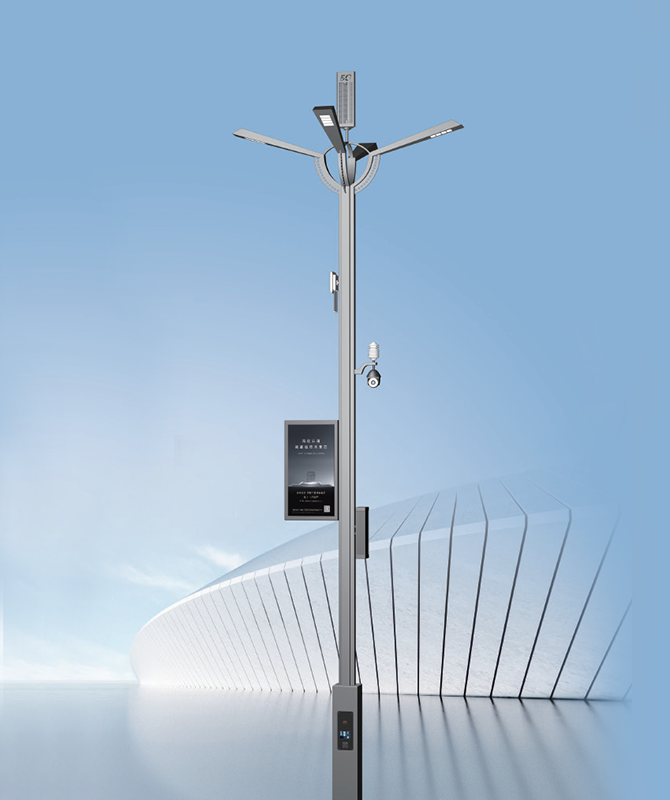
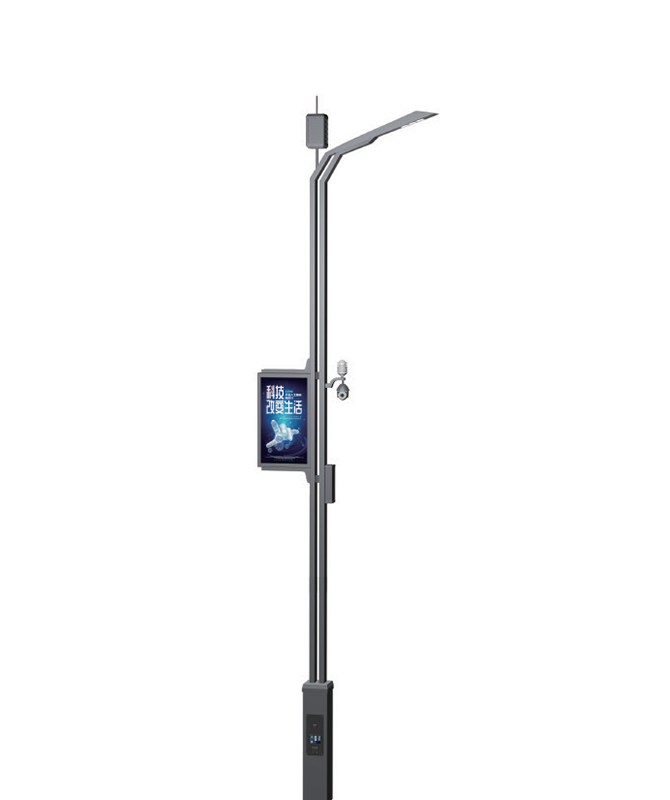
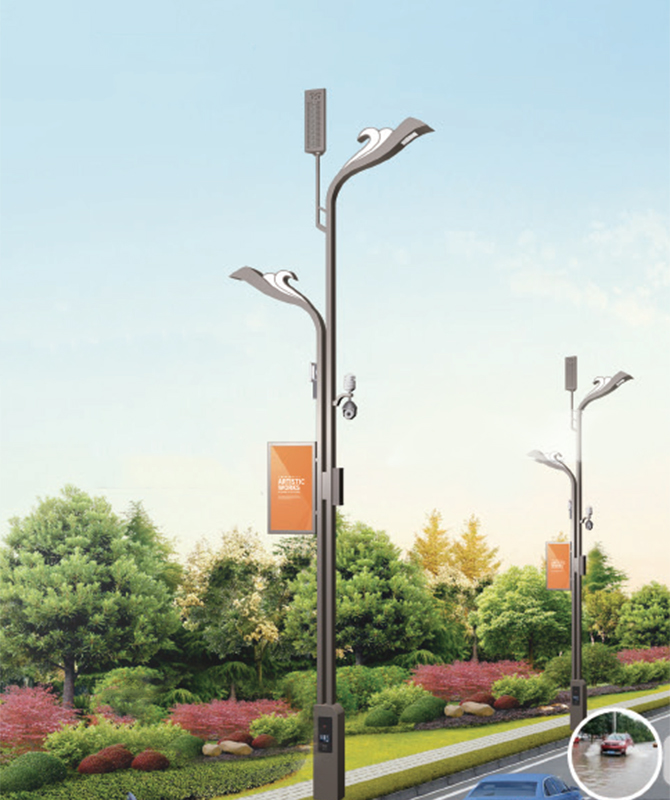
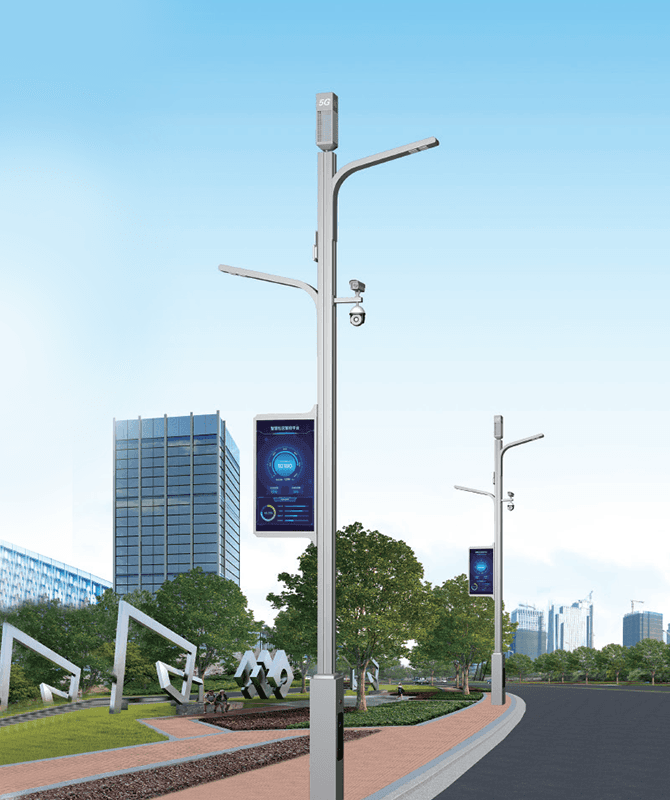
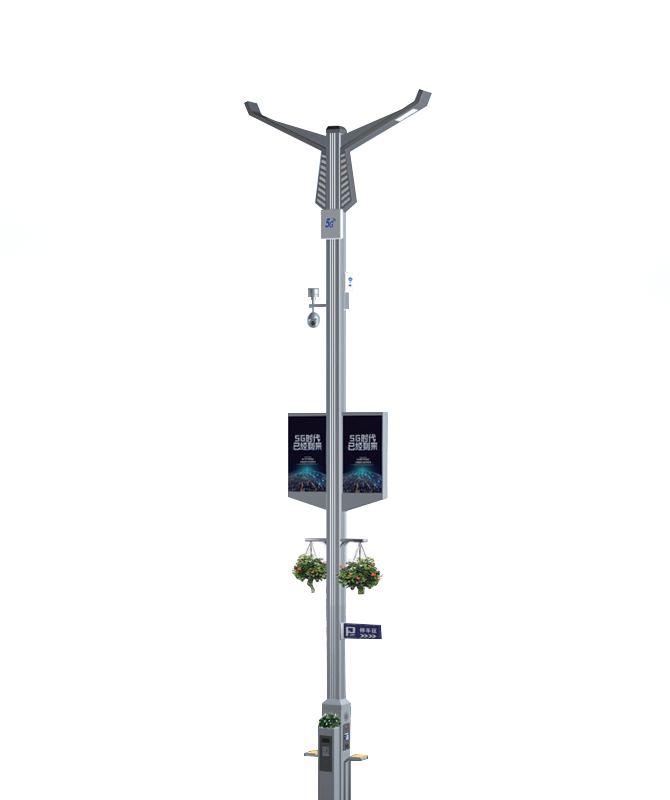
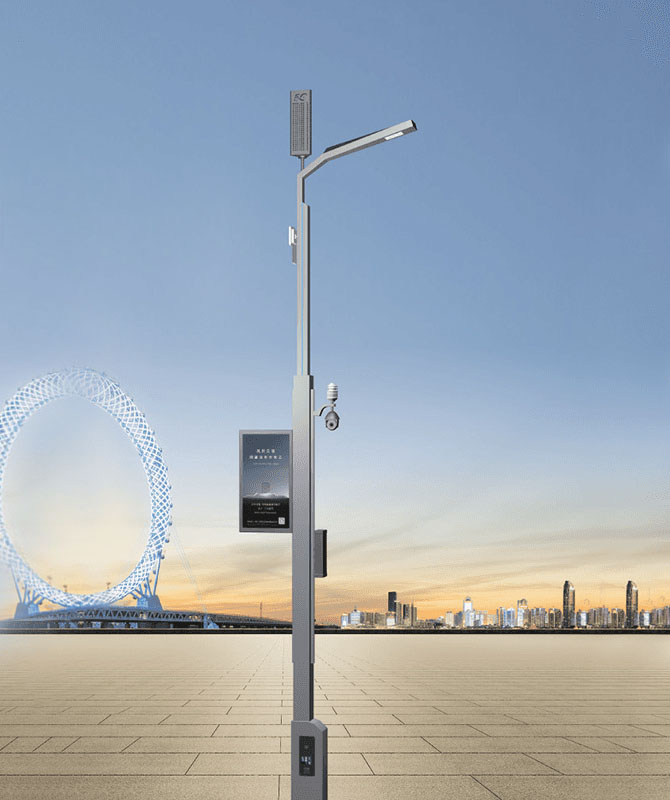
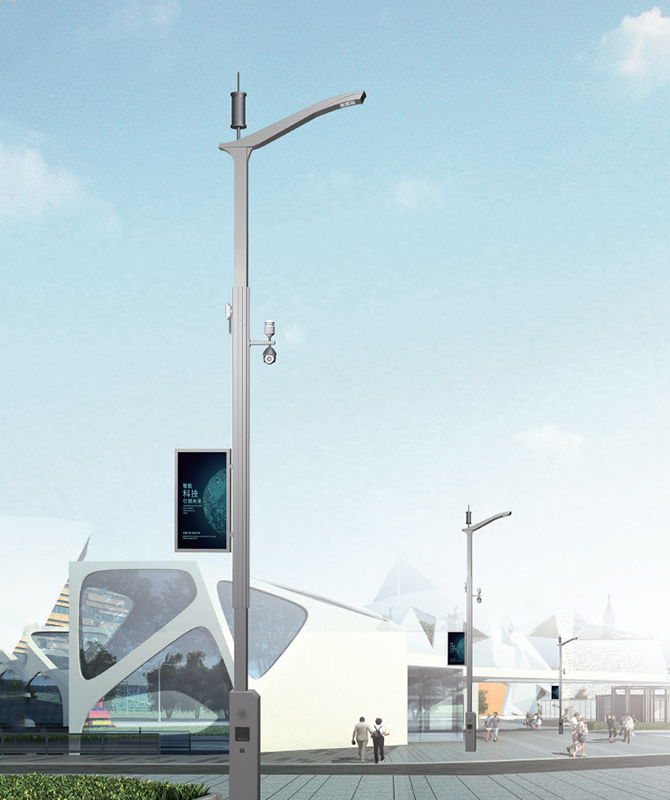
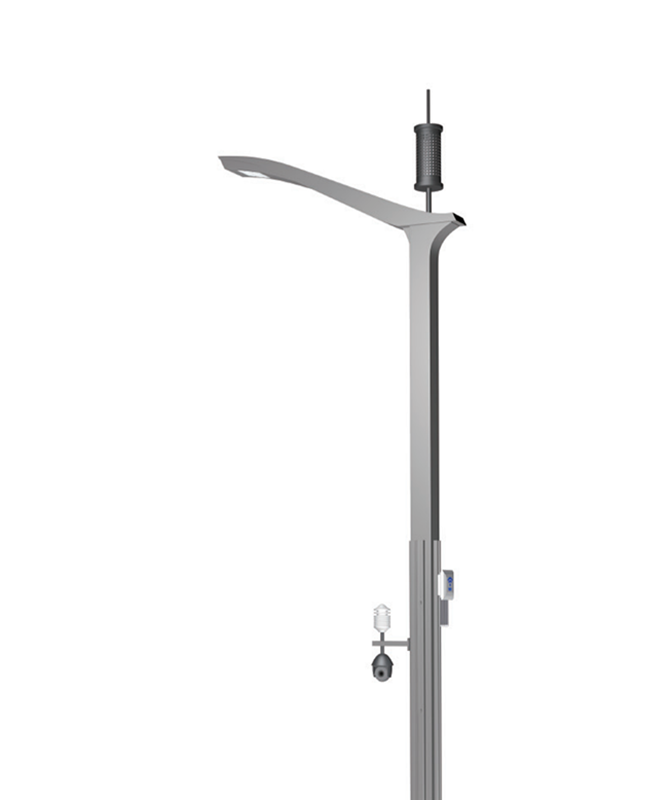
Tall masts also deserve lightning protection, earthing and a plan for vibration and metal fatigue, particularly where poles carry more than lighting. If a mast is also used for cameras, speakers or signage, the load case and the cable management should be agreed before the pole is ordered, not after it is standing in concrete.
A lighting design is only as good as its final aiming and settings. Before handover, work through this list with the contractor:
Yangzhou Shangyuan Intelligent Transportation Technology Co., Ltd designs and manufactures LED luminaires, high-mast and combination poles, signal poles, solar integrated lights and the control equipment that supports them. Most of our work is on municipal roads, intersections and public spaces, and sports courts sit naturally alongside that: the same poles, the same optics, the same approach to weatherproofing and long-term reliability.
If you are planning a court, whether it is a new build or a retrofit around poles that already exist, send us the court dimensions, the level of play and the power available on site. We will come back with a layout suggestion, aiming angles and a quotation you can put in front of the committee. Reach us through the contact page or request a quote and tell us what the court has to do.
Get the parameters right, aim carefully, and the best compliment a court lighting scheme can receive is that nobody notices it at all.
+86 150 6287 9911
[email protected]
Yangling Road Industrial Concentration Zone, Songqiao Town, Gaoyou City, JIangsu, China. Copyright © Yangzhou Shangyuan Intelligent Transportation Technology Co., Ltd. All Rights Reserved.
Wholesale Intelligent Streetlight Manufacturers

Privacy