ENG
ENG
 English
 Español
 عربى
عربىHome / Newsroom / Industry News / Why Are High-Power LED Street Lights Becoming the Critical Engine for Sustainable and Smart Urban Infrastructure


Get a Quote 
Every night, more than 300 million street lights illuminate roads, pavements, and public spaces across the world. The electricity they consume represents roughly 19 percent of global lighting energy demand. High-efficiency smart city LED street lighting is the technology, policy, and data platform converging to transform that enormous consumption into a new kind of urban infrastructure, one that illuminates intelligently, adapts in real time, and generates the operational intelligence that underpins the broader smart city ecosystem.
Municipal street lighting sits at the intersection of public safety, urban livability, carbon accountability, and fiscal management. For most city governments, it is simultaneously one of the largest single energy expenditure line items and one of the least scrutinized. A mid-sized European city operating 80,000 conventional high-pressure sodium luminaires may spend upward of 12 million euros annually on electricity for street lighting alone, while emitting tens of thousands of tonnes of carbon dioxide from an asset class that could, with the right investment, be made dramatically more efficient.
Conventional high-pressure sodium and metal halide street lights, which still account for the majority of the global installed base, operate at luminous efficacies of 80 to 120 lumens per watt, burn at fixed output regardless of whether anyone is present on the road below, and require lamp replacement every 12,000 to 24,000 hours. They produce light in a broad spectral band that scatters significantly, with much of the output directed upward or sideways rather than onto the pavement surface where it is needed. They are dumb in the precise sense of the word: they produce light and consume electricity, and that is all they do.
High-efficiency smart city LED street lighting changes every one of these characteristics simultaneously. LED luminaires today achieve efficacies of 150 to 220 lumens per watt in production products, with laboratory demonstrations exceeding 250. They produce directionally controlled light that places photons precisely on target surfaces rather than the surrounding sky. They last 50,000 to 100,000 hours without lamp replacement. And through the addition of networked control systems, sensors, and communications hardware, they become active nodes in the urban data network, capable of responding to real-world conditions and contributing operational intelligence across the city.
Cities replacing HPS with smart dimming LED systems consistently achieve 70 to 80 percent reductions in street lighting electricity consumption.
Premium LED luminaires with L90 ratings exceeding 100,000 hours deliver 20-plus years of service before lumen depreciation requires replacement.
Adaptive control systems that dim luminaires based on traffic and time of night deliver 35 to 45 percent further savings beyond the LED hardware gain.
To understand why LED technology transforms street lighting economics so dramatically, it is necessary to examine the physics underpinning light generation in both conventional sources and modern LEDs. High-pressure sodium lamps generate light through electrical excitation of sodium vapor, a process that produces a characteristic orange-yellow spectrum with a color rendering index below 25. This poor color rendering means that under HPS lighting, human vision operates at reduced acuity for color discrimination and peripheral detail recognition, two factors critically important to pedestrian and driver safety.
LED light generation occurs through electroluminescence: electrons recombine with electron holes in a semiconductor material, releasing energy as photons. By selecting semiconductor compounds with appropriate bandgap energies and coating blue-emitting chips with phosphor layers, manufacturers produce white light with controllable color temperatures and color rendering indices. Street lighting specifications typically target 3000 to 4000 Kelvin color temperature, balancing the scotopic sensitivity enhancement of cooler white light against the sky glow reduction and warmer appearance preferred in residential environments, with CRI values of 70 to 80 for roadway applications and 80-plus for pedestrian and urban realm settings where facial recognition matters for personal security.
Luminous efficacy in an LED street luminaire is the product of multiple efficiency stages: the wall-plug efficiency of the LED chip itself, the optical efficiency of the secondary lens and reflector system, the driver conversion efficiency, and the thermal management effectiveness that keeps junction temperature within the range where efficiency is maintained. The best production luminaires achieve overall system efficacies above 160 lumens per watt through the combination of high-efficiency 3V class LED packages, precision molded optical systems with transmission efficiencies above 90 percent, constant-current drivers with power factor correction and conversion efficiencies above 93 percent, and passive aluminum heatsink designs that maintain LED junction temperatures below 70 degrees Celsius at full load in 35-degree-Celsius ambient conditions.
Road lighting photometry is governed by international standards including EN 13201 in Europe and ANSI/IES RP-8 in North America, which define luminance and illuminance requirements for road classes ranging from high-speed arterials to quiet residential streets. Achieving compliance while minimizing energy consumption requires optical systems that precisely shape the luminaire's output distribution to match the road surface geometry without producing disability glare for drivers or light trespass onto adjacent properties.
Modern LED street luminaires use injection-molded polycarbonate or glass secondary optics with precisely calculated micro-prism and free-form lens structures that direct light into asymmetric distributions tailored to the pole spacing and mounting geometry of each road classification. Type II and Type III distributions, which project light forward and to the sides with minimal upward component, are standard for single-side mounted luminaires on moderate-width roads. Full-cutoff designs that produce zero upward light output are increasingly specified in dark-sky compliant installations and have become the default in environmentally sensitive areas and residential zones where light pollution affects biodiversity and resident quality of life.
The intelligence of a smart city LED street lighting deployment resides not in the luminaire alone but in the networked control system that coordinates luminaire behavior across an entire road network in response to real-world conditions. Understanding the control stack, from the luminaire-level controller to the central management software, is essential for cities evaluating procurement options and vendors.
A luminaire-level controller, often called a node or a streetlight controller, is a small electronic unit mounted inside or attached to each luminaire that provides individual addressability, dimming control, metering, and sensing capability. Controllers communicate with the network using one of several wireless protocols: TALQ-compliant mesh radio networks operating in the 868 MHz or 915 MHz bands, cellular LTE-M or NB-IoT connections for wide-area deployments, Zigbee Pro mesh for dense urban grids, or power line communication for installations where radio frequency operation is restricted. The TALQ Consortium's open protocol standard, adopted by most major control system vendors, ensures interoperability between controllers from different manufacturers and central management software from different providers.
Central management software aggregates data from every luminaire-level controller across the network into a unified dashboard that allows operators to monitor the status, energy consumption, and alarm state of every light point in real time. Scheduling modules allow operators to define dimming profiles for each road segment based on time of night, day of week, and season, automatically reducing light output to 50 or 30 percent during low-traffic overnight periods while restoring full output as dawn approaches or traffic volumes increase. Fault detection algorithms identify luminaire failures, driver faults, communications dropouts, and energy anomalies automatically, generating work orders for field maintenance teams and eliminating the traditional reliance on public fault reporting to identify outages.
The most advanced deployments move beyond schedule-based dimming toward truly adaptive systems that vary light output in response to real-time sensor inputs. Passive infrared and microwave radar sensors embedded in luminaires or mounted on separate poles detect the presence and movement of vehicles, cyclists, and pedestrians. When activity is detected, luminaires in the approaching zone brighten to full output; as activity passes, trailing luminaires reduce output again. This presence-adaptive dimming can reduce energy consumption by a further 20 to 35 percent compared to fixed schedule dimming, while ensuring that any road user always approaches a well-lit zone regardless of the time of night.
| Control Technology | Communication Protocol | Typical Energy Saving | Best Application | Tag |
|---|---|---|---|---|
| Schedule-Based Dimming | TALQ Mesh / PLC | 30 to 40% | All road types, baseline deployment | Standard |
| Presence-Adaptive Dimming | Zigbee / LTE-M | 50 to 65% | Residential streets, park paths, low-traffic roads | Advanced |
| Ambient Light Harvesting | Integrated photocell | 5 to 12% additional | All outdoor installations with variable sky conditions | Standard |
| Vehicle-Triggered Brightening | Radar sensor, mesh | 55 to 70% | Rural roads, motorway service areas | Advanced |
| AI Predictive Scheduling | Cloud / cellular | 60 to 75% | Large urban networks with traffic data integration | Premium |
| Emergency Override / Blue Light | Emergency services integration | Network-wide | City-wide deployment, safety critical corridors | Premium |
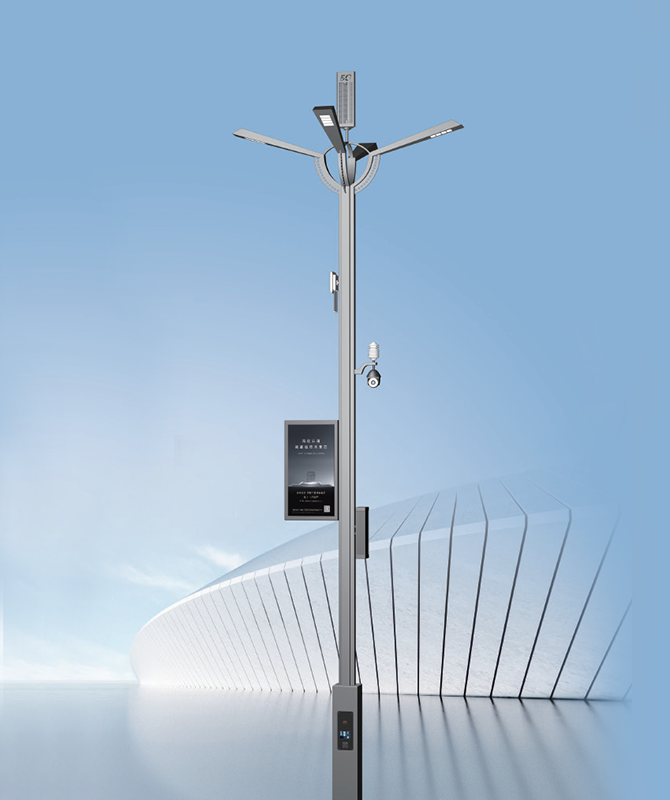
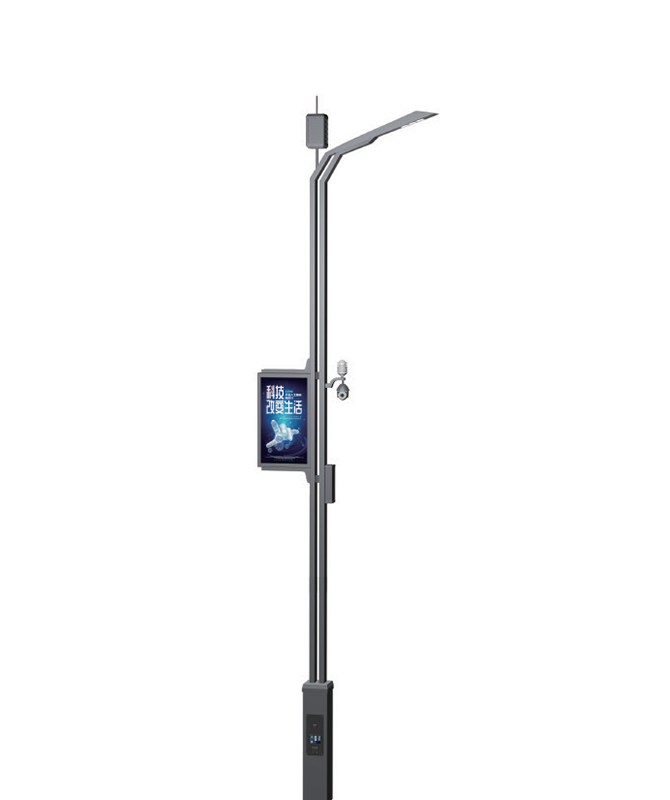
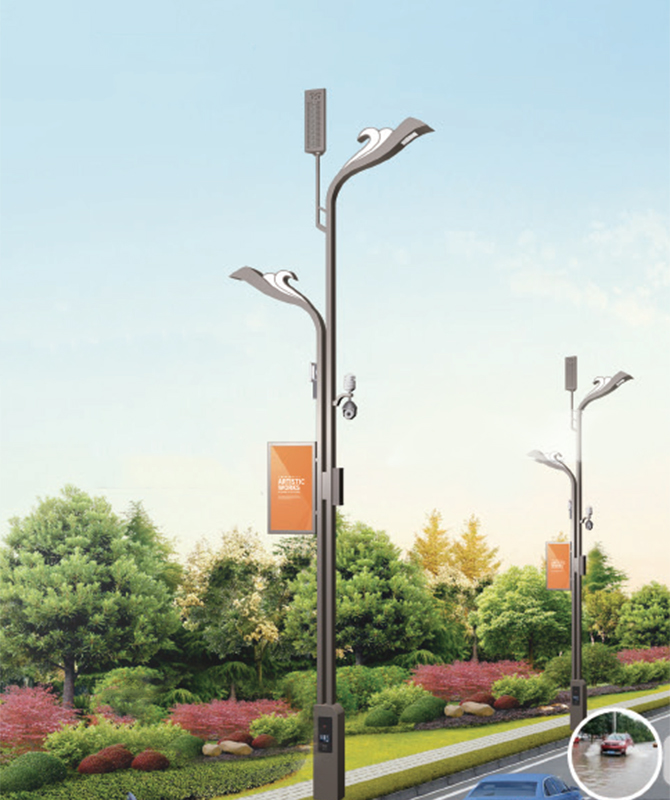
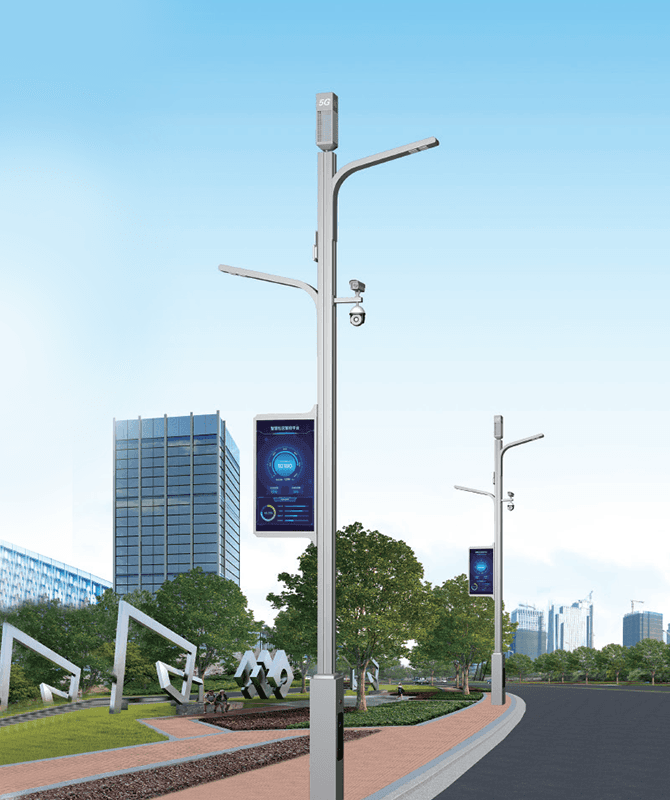
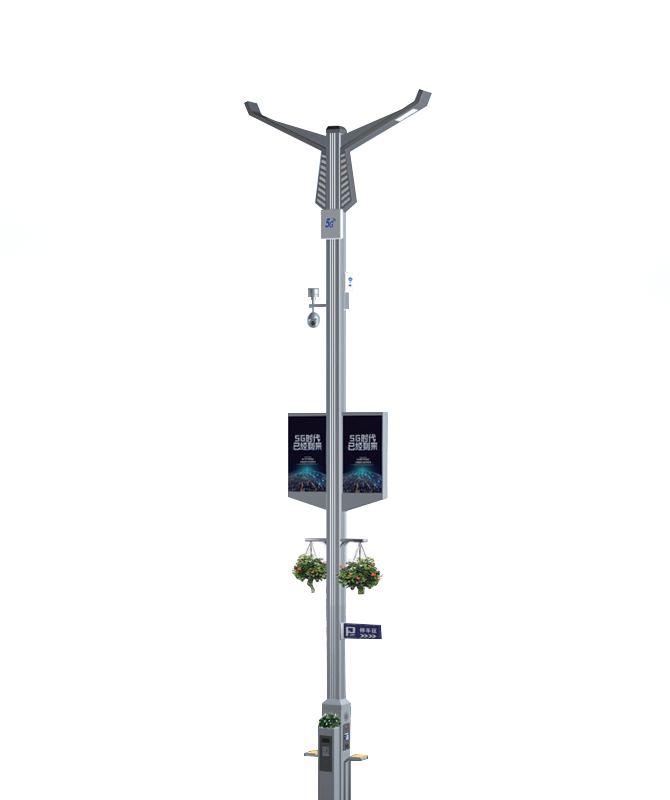
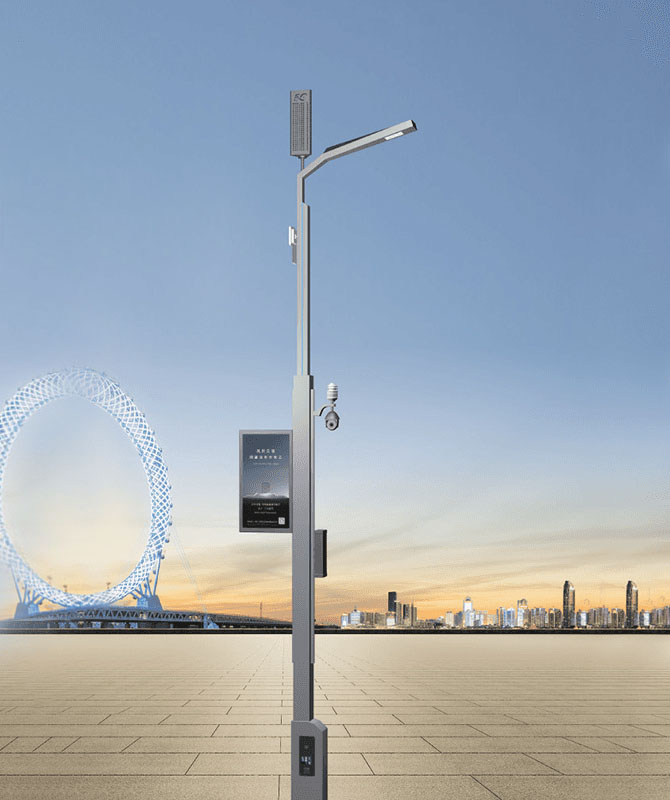
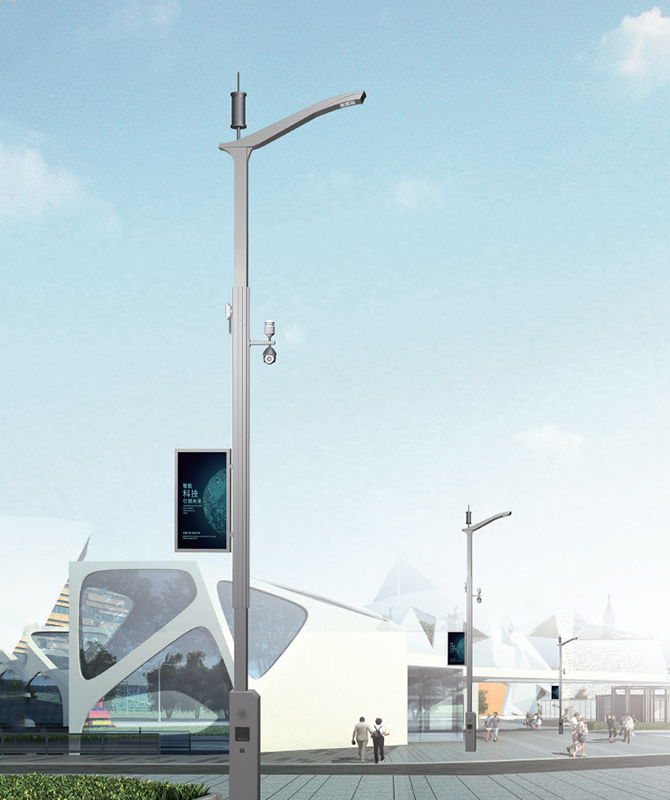
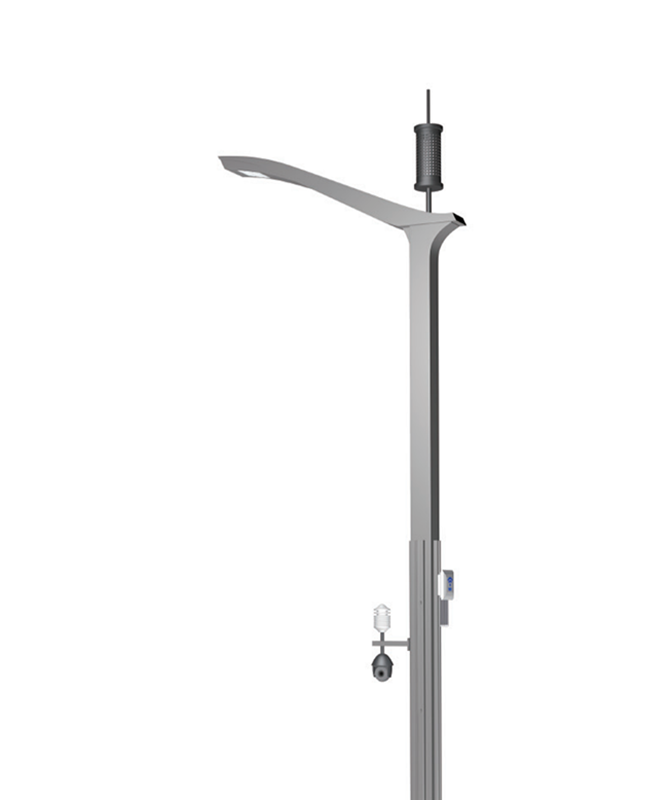
The true transformative potential of high-efficiency smart city LED street lighting extends far beyond the energy savings that dominate procurement justifications. The street pole already occupies an unparalleled position in the urban environment: it is ubiquitous, it has power, it has communications infrastructure, it is at human scale, and it commands sightlines across every street in the city. Once converted to a networked smart luminaire, it becomes the logical host platform for a wide range of urban sensors and services.
Air quality sensors measuring particulate matter concentrations, nitrogen dioxide, ozone, and carbon monoxide can be integrated into luminaire housings or pole-mounted alongside them, creating dense urban air quality monitoring networks at a fraction of the cost of standalone monitoring station deployments. Data from hundreds or thousands of sensor nodes allows cities to map air quality at the block level, identify pollution hotspots, correlate air quality events with traffic patterns or industrial activity, and provide residents with real-time air quality information through public dashboards and mobile applications.
Cameras and radar sensors mounted on smart street lighting poles generate continuous traffic count, speed, and classification data without the road surface disruption and maintenance burden of inductive loops. Machine learning-based computer vision applied to camera feeds can distinguish vehicle types, detect wrong-way driving, count pedestrian flows, and identify near-miss incidents in real time. This data feeds adaptive traffic signal control systems, informs urban mobility planning, and provides the evidence base for road safety interventions at a spatial resolution and temporal coverage impossible with conventional manual counting methods.
The densification of 5G mobile networks requires small cell antennas placed at intervals of 100 to 250 meters in urban environments to deliver the high data rates and low latency that 5G promises. Street lighting poles, already sited at approximately the right spacing across urban road networks, are the natural host infrastructure for these antennas. Smart city LED street lighting programs that include conduit provision within pole foundations and sufficient power supply capacity to support communications equipment dramatically reduce the cost and disruption of subsequent small cell deployment, making the street lighting investment the foundation layer of the city's future digital infrastructure.
"A city that installs smart LED street lighting is not merely replacing lamps. It is commissioning the nervous system of the smart city: a distributed network of power, connectivity, and sensing that every subsequent smart city service will build upon."
Smart street lighting poles are increasingly specified with integrated electric vehicle charging capability, particularly in urban areas where kerbside charging is the primary charging opportunity for residents without off-street parking. Lamp post charging units delivering 3 to 7 kilowatts of AC charging power can be installed within existing pole structures using the power supply already in place for the luminaire, extending the utility of each pole investment while advancing the city's electric vehicle adoption targets. Advanced installations manage the combined luminaire and charger load dynamically, reducing luminaire output during high-demand charging periods to stay within the rated capacity of the existing supply cable.
High-efficiency smart city LED street lighting offers an extraordinary opportunity to reduce light pollution simultaneously with energy consumption, but realizing this opportunity requires deliberate design choices rather than a default assumption that brighter is better.
Conventional HPS street lighting produced significant upward light scatter and broad spectral output that affected both human circadian rhythms and wildlife behavior across wide areas. The blue-white spectrum of early generation LED replacements, while energy-efficient, proved in some cases to produce greater sky glow than the warm-spectrum sources they replaced because short-wavelength blue light scatters more effectively in the atmosphere. This finding, published in peer-reviewed studies of urban observatories and confirmed by satellite nighttime imagery analysis, prompted a significant rethink of color temperature selection in street lighting standards.
The current consensus, reflected in updated guidelines from the International Dark-Sky Association, the Illuminating Engineering Society, and national standards bodies across Europe and North America, recommends color temperatures at or below 3000 Kelvin for most outdoor lighting applications, with values of 2200 to 2700 Kelvin preferred in ecologically sensitive zones such as coastal areas, woodland edges, and parks. Smart dimming capability adds a further ecological benefit: reducing light output to 20 or 30 percent during the hours of 1 to 5 AM, when human activity on most streets is minimal, dramatically reduces the total photonic footprint of the lighting installation even when maintained levels during active hours remain unchanged.
The capital requirement for a city-wide smart LED street lighting conversion is substantial. A mid-sized city replacing 60,000 luminaires at an installed cost of 600 to 1200 euros per point faces a total program cost of 36 to 72 million euros. Yet the energy savings, maintenance cost reductions, and carbon credit revenues available from the transition are typically sufficient to fully self-fund the investment over a seven to twelve year payback period, depending on the existing tariff structure, the age of the equipment being replaced, and the depth of the efficiency improvement achieved.
Energy performance contracting remains the most widely used financing model for large-scale street lighting conversion programs globally. Under an EPC arrangement, a specialist company designs, finances, installs, and maintains the new lighting system, guaranteeing a minimum level of energy savings and repaying itself from the verified savings stream over a contract period of typically 10 to 20 years. The municipality takes ownership of fully paid-off assets at contract end while having borne no upfront capital cost and assumed no technology performance risk throughout the contract period.
Municipalities with access to capital markets are increasingly financing street lighting conversion programs through green bond issuances, where the verified carbon reduction and energy efficiency outcomes of the lighting program provide the green certification criteria that allow the bond to be marketed to ESG-focused investors at preferential rates. The London Green Finance Institute, the Climate Bonds Initiative, and equivalent bodies in other jurisdictions provide certification frameworks that quantify the climate benefits of street lighting programs in terms acceptable to bond rating agencies and institutional investors.
Independent analysis of completed smart LED street lighting programs across 40 European cities found median simple payback periods of 8.2 years when energy savings alone were credited, falling to 5.7 years when maintenance cost reductions and avoided capital expenditure on lamp replacements were included in the calculation. Programs that monetized additional data services revenues from air quality and traffic monitoring achieved payback periods below five years in several cases.
Successful delivery of a large-scale smart city LED street lighting program requires a disciplined sequential approach that manages technology selection risk, installation sequencing, commissioning complexity, and public communication in parallel.
The global track record of smart city LED street lighting conversions now encompasses hundreds of completed programs across cities of all sizes and economic contexts, providing a rich evidence base from which procurement teams can draw lessons.
Los Angeles completed one of the largest early LED street lighting conversions, replacing more than 140,000 luminaires beginning in 2009. The program reduced street lighting energy consumption by approximately 63 percent and is credited with saving over 8 million dollars annually in electricity costs. The subsequent addition of networked controls and sensors created one of the earliest large-scale urban data networks from street lighting infrastructure.
Copenhagen's street lighting program integrated LED conversion with adaptive control and extensive sensor deployment as part of its citywide carbon neutrality target. The city's approach of specifying 2200 Kelvin luminaires in residential zones and 3000 Kelvin on arterial roads is widely cited as a model for balancing efficiency, ecology, and public acceptance in a northern European context.
Singapore's Land Transport Authority deployed smart LED street lighting with integrated traffic sensing across major arterial roads, enabling the first fully automated adaptive lighting system tied directly to expressway traffic management. Luminaire output on monitored corridors varies dynamically with measured traffic density, achieving verified energy savings of 72 percent while maintaining full compliance with road lighting standards during all measured periods.
Guadalajara's EPC-financed conversion of 62,000 street lights, completed in 2016, demonstrated the viability of the performance contracting model in a developing economy context. Verified energy savings exceeded the contracted minimum by 11 percent, generating surplus revenue that funded early expansion of the sensor network beyond the original program scope. The project has been replicated across several other Mexican cities using the same contractual framework.
The current generation of high-efficiency smart city LED street lighting, impressive as its performance already is, represents a point on a technology trajectory that continues to advance rapidly across several dimensions.
Light fidelity, or Li-Fi, is a wireless communication technology that modulates the intensity of LED light at frequencies imperceptible to the human eye to transmit data at rates competitive with WiFi. Street lighting luminaires, which produce continuous visible light output across public spaces, are a natural Li-Fi transmission infrastructure. Pilot programs in several European cities are testing Li-Fi-enabled luminaires that provide free high-speed data connectivity to pedestrians and cyclists within their illuminated zones, effectively turning every street light into a connectivity access point without the radio frequency spectrum licensing requirements associated with conventional wireless networks.
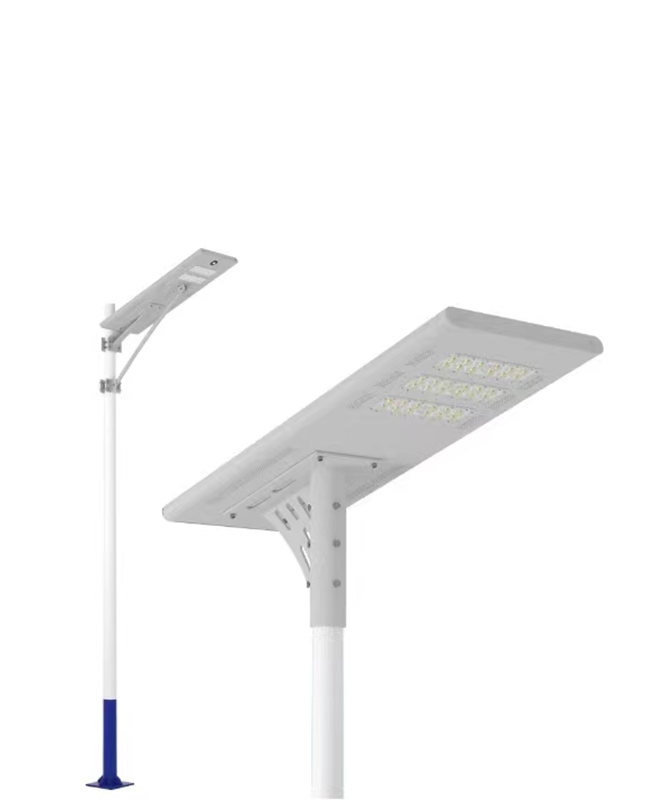
In urban areas with high solar irradiance and in off-grid rural and peri-urban settings, integrated solar-powered smart street lighting eliminates the grid connection entirely. Modern solar street light systems combine high-efficiency monocrystalline photovoltaic panels with lithium iron phosphate battery storage sized for multiple consecutive cloudy days of autonomy, LED luminaires with integrated adaptive control, and cellular connectivity for remote monitoring. System intelligence manages the balance between energy harvest, storage state, predicted irradiance from weather API feeds, and adaptive output scheduling to maintain illumination through extended low-irradiance periods without over-sizing battery capacity. These systems are increasingly competitive with grid-connected installations in locations where the cost of grid extension exceeds the premium of self-contained solar units.
Machine learning applied to the operational data stream of a large street lighting network creates optimization opportunities that rule-based control systems cannot access. AI-driven scheduling systems trained on years of traffic pattern data, weather records, and energy tariff history can predict lighting demand profiles with sufficient accuracy to schedule dimming profiles that achieve regulatory compliance targets while minimizing cost, accounting for the interaction between tariff structure, grid carbon intensity signals, and time-of-day demand patterns. Predictive maintenance models trained on driver performance data, operating temperature history, and cumulative burn hours can forecast individual luminaire failures weeks before they occur, allowing field teams to combine multiple replacements in a single visit and achieve maintenance cost reductions of 30 to 40 percent compared to reactive fault-response regimes.
Researchers at several universities are demonstrating tunable LED street luminaires that shift color temperature dynamically across the night, producing warmer 2000 Kelvin output during peak ecological sensitivity hours after midnight and transitioning to cooler 4000 Kelvin output during dawn hours when enhanced visibility for commuters becomes the priority. Coupled with circadian-responsive dimming that accounts for human melatonin suppression sensitivity curves, these systems represent a future in which street lighting is designed not just for visibility and energy efficiency but for human biological health and urban ecological integrity simultaneously.
As street lighting networks become networked computing infrastructure, they acquire the security and governance implications of any connected urban system. A smart street lighting network that can be remotely accessed to dim or extinguish luminaires across a city is also a target for cyberattack, and the consequences of a successful attack range from neighborhood darkness to interference with emergency service operations.
Cybersecurity requirements for smart street lighting systems are addressed in emerging standards including ETSI EN 303 645 for consumer IoT devices, NIST guidelines for IoT security in the United States, and city-specific procurement requirements that mandate encryption of all communications between luminaire controllers and central management software, multi-factor authentication for administrative access, automatic security patch deployment capability, and network segmentation that prevents street lighting control systems from being used as an entry point into other municipal systems.
Data governance questions arise from the sensor payloads that smart lighting networks increasingly carry. Camera-equipped poles capable of identifying individuals raise legitimate civil liberties concerns that require clear policy frameworks specifying what data is collected, how long it is retained, who can access it, and under what legal authority surveillance capabilities may be activated. Cities that have navigated these questions most successfully have done so through transparent public consultation processes that established community consent and clear governance rules before sensors were deployed, rather than attempting to retrofit governance onto an already operational surveillance infrastructure.
High-efficiency smart city LED street lighting is the single most impactful infrastructure investment available to most city governments today in terms of the ratio of benefit delivered across energy, carbon, safety, data, and urban livability dimensions to capital deployed. The technology is mature, the financing models are proven, the regulatory frameworks are established, and the performance track record across hundreds of completed programs is unambiguous. Cities that delay this transition are paying avoidable energy costs every night, emitting avoidable carbon with every hour of darkness, and postponing the data infrastructure that will underpin every smart city service their residents will come to expect.

 +86 150 6287 9911
  [email protected]
  Yangling Road Industrial Concentration Zone, Songqiao Town, Gaoyou City, JIangsu, China.
 Copyright © Yangzhou Shangyuan Intelligent Transportation Technology Co., Ltd. All Rights Reserved.
Wholesale Intelligent Streetlight Manufacturers Privacy