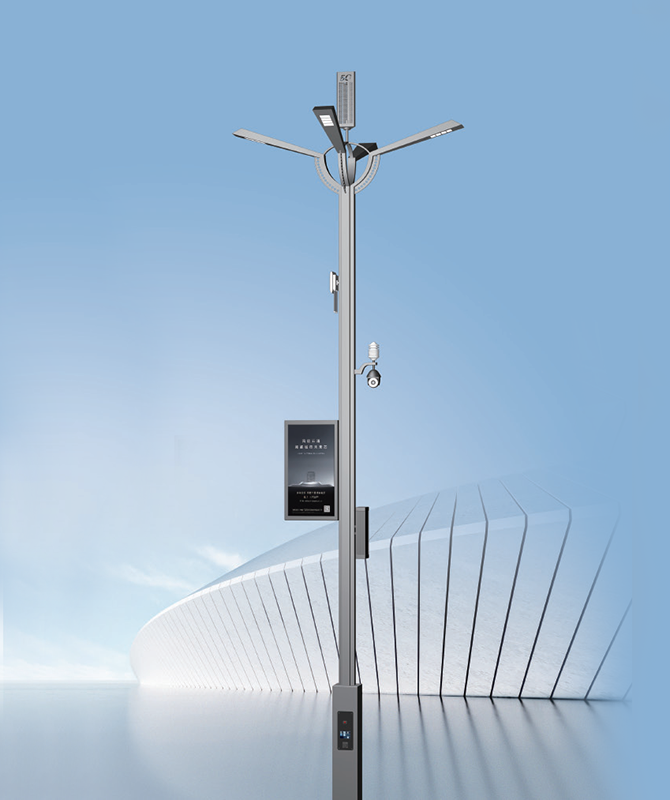
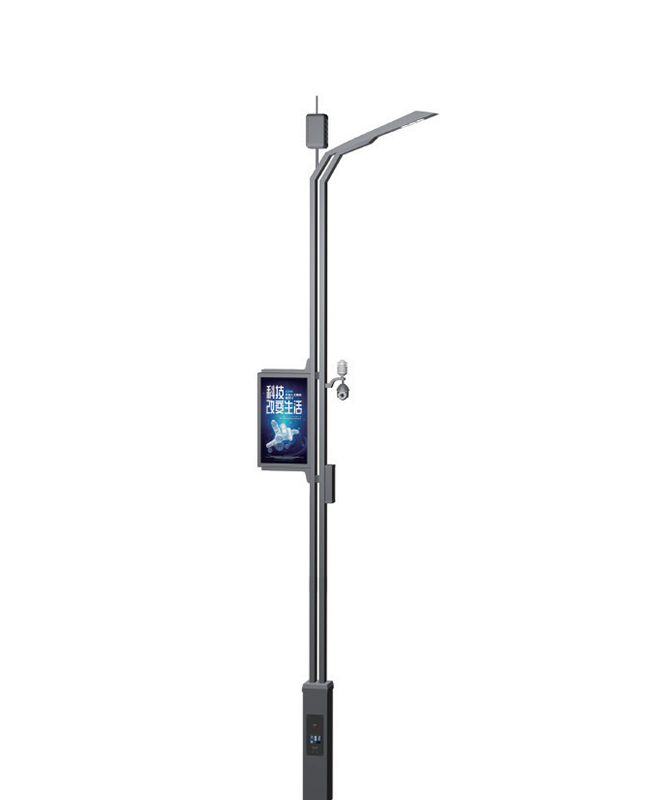
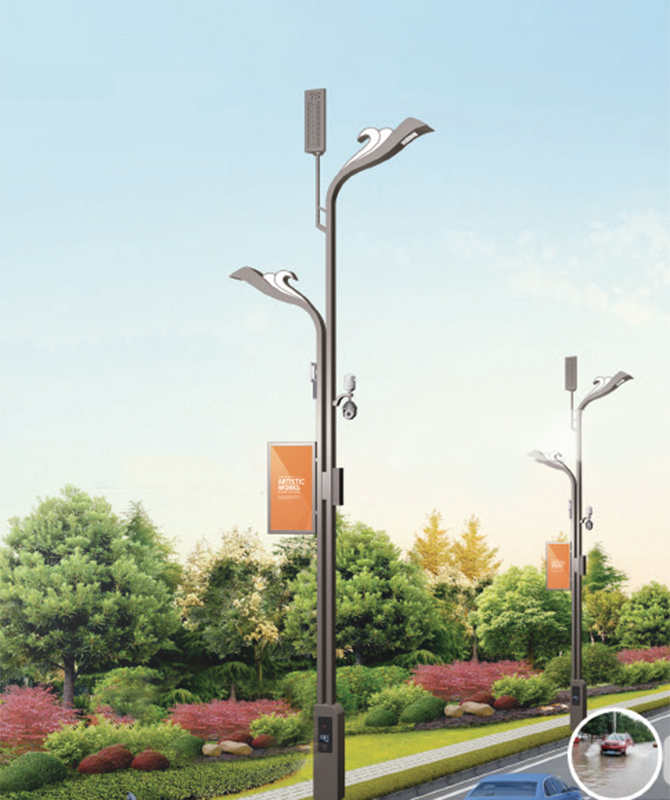
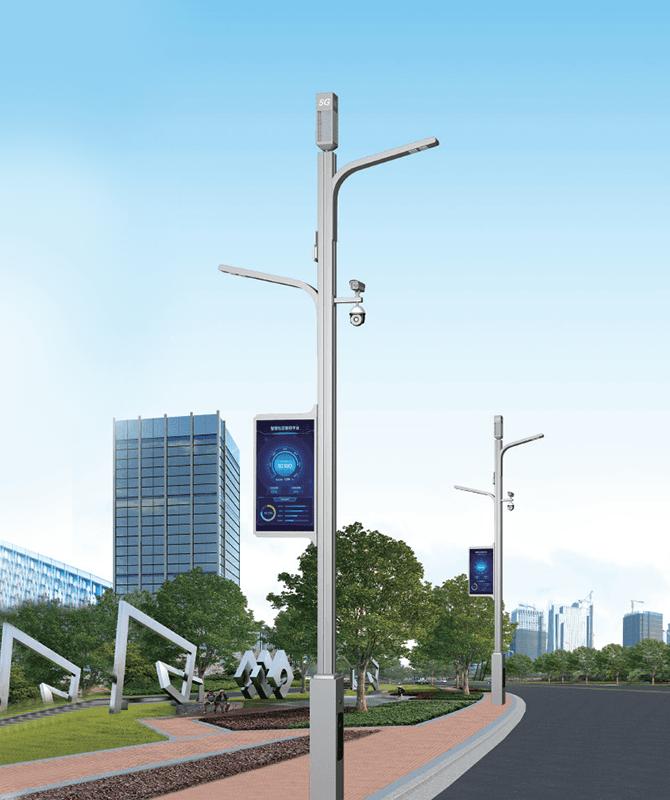
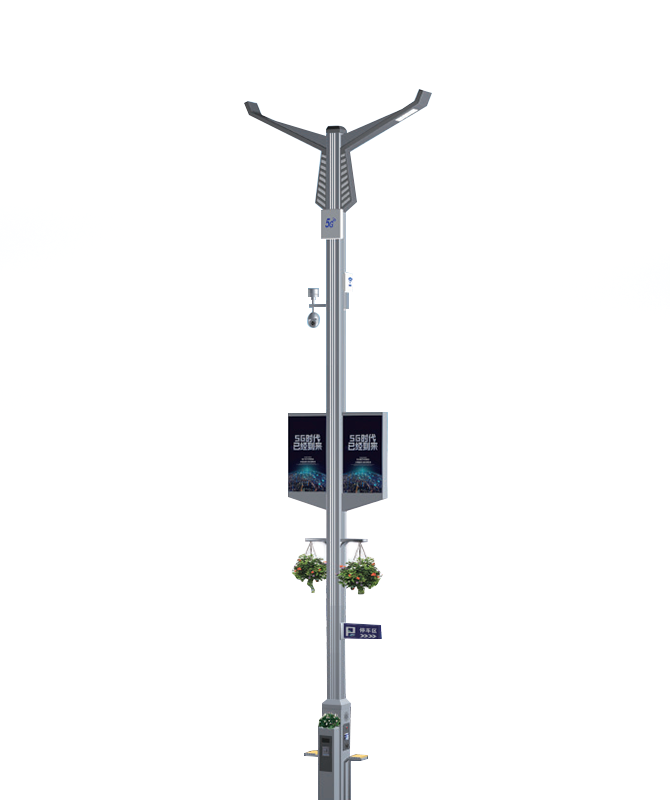
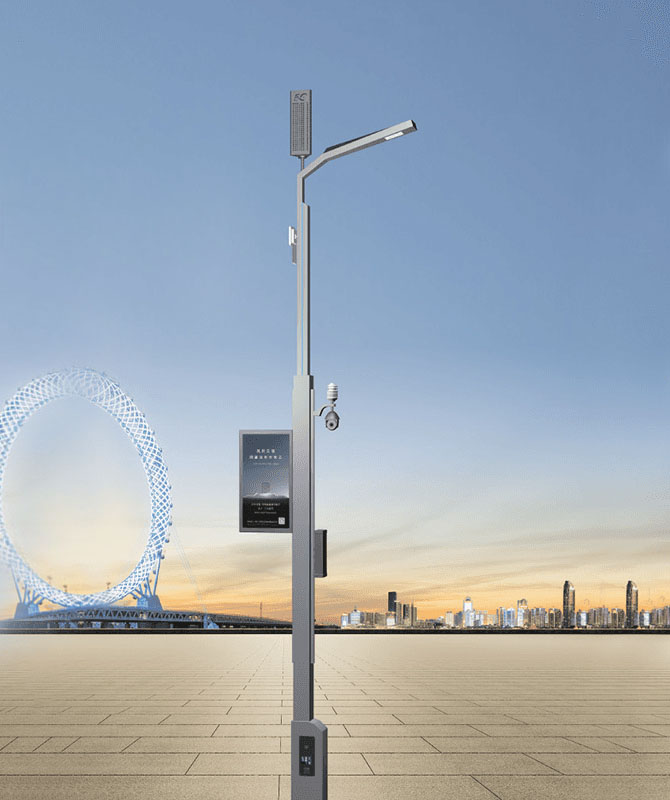
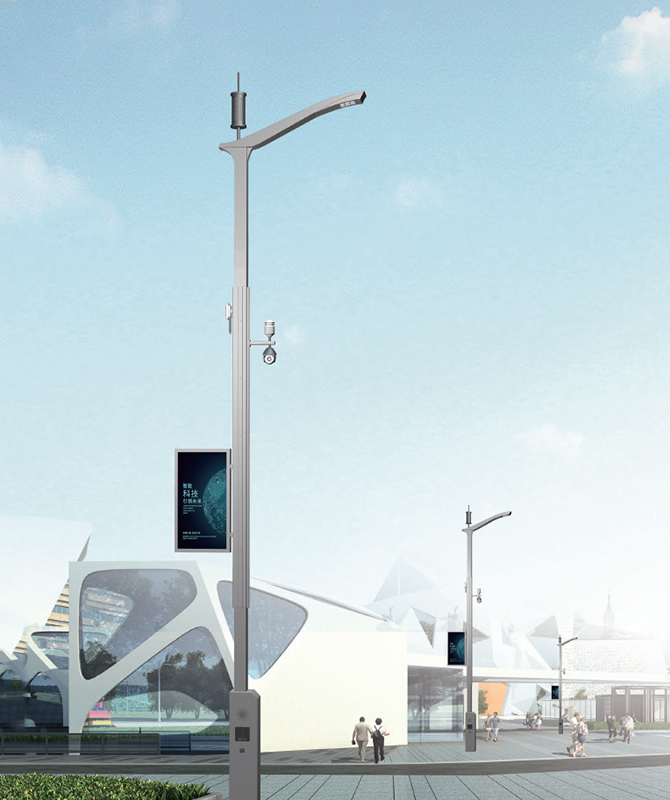
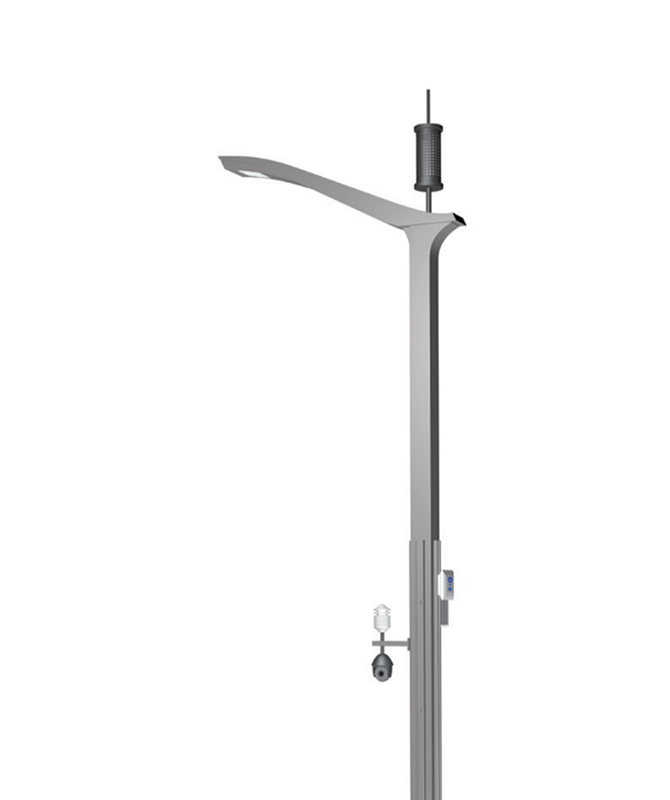
When a city plans a new road, or a property developer designs a residential area, one of the first practical questions is: what should be the height of lamppost? At first glance it may seem like a small detail, but the answer influences light distribution, traffic safety, energy consumption, and even the visual rhythm of a street. As a manufacturer of lighting and intelligent transportation equipment, we have worked on projects ranging from small garden paths to highway interchanges, and we know how much difference a well-chosen pole height makes. This guide explains the factors behind lamppost height, gives practical ranges for common settings, and highlights the design choices that lead to better roads and safer spaces.
The height at which a lamp is mounted changes how light falls on the road. A lower mounting height produces a narrow, intense pool of light; a higher one produces a broader, softer distribution. If the height is not matched to the road width and the luminaire's beam pattern, you can end up with dark strips between poles or with glaring light that bothers drivers and residents. Pole height also affects how many poles you need, which directly affects project cost. In short, it is a structural factor that should be decided early in the design process.
From a safety perspective, height matters because the human eye relies on contrast and uniformity. A road that is well lit but uneven can create dark patches where hazards are difficult to see. Council standards often set maximum permitted glare and spill light, and the correct pole height is one of the tools used to stay within those limits. On the cost side, a taller pole may reduce the number of poles required, but it also increases the cost per pole. Finding the balance is part of the designer's job.
There is also an aesthetic dimension. In historic districts, a low traditional-looking post is often more appropriate than a 12-meter steel pole. In modern city centers, a clean, slightly taller post can help reduce visual clutter by allowing fewer poles. The height of lamppost can therefore be both an engineering decision and a design decision.
Several variables come together to define the right height for a specific location. No single number works for every street.
These factors are interconnected. For example, a road with wide carriageway and heavy truck traffic may need a higher mounting height to keep the light spread evenly across the full width. But if the area also has large canopy trees, a higher pole may place the light above the branches, which can be an advantage. On the other hand, communities sometimes prefer lower lighting to protect dark skies and reduce trespass into homes. The key is to evaluate the project as a whole and not to copy a height used on a different road just because it worked there.
The following table shows typical lamppost heights based on common project types. Keep in mind that local preferences, road geometry, and lighting standards may shift these values. Use them as a starting point for discussion.
| Application | Typical Lamppost Height | Notes |
|---|---|---|
| Garden paths and courtyards | 3 - 4 m | Low decorative lighting; good for security and atmosphere |
| Residential streets | 4 - 6 m | Balances pedestrian scale with adequate coverage |
| Parking lots and local roads | 6 - 8 m | Supports standard cobra-head or LED street lights |
| Secondary roads | 8 - 10 m | Good for two-lane roads with regular spacing |
| Major urban roads | 10 - 12 m | Provides even illumination for multi-lane traffic |
| Highways and expressways | 12 - 15 m | Often combined with high output LED luminaires |
| Interchanges, ports, industrial areas | 20 - 40 m | High-mast lighting covers very large areas from one pole |
Choosing a height is not an isolated decision. It works together with pole spacing and fixture selection. A common rule of thumb for conventional street lighting is that the spacing between poles should be about three to four times the mounting height. If the height is 10 meters, poles are often placed 30 to 40 meters apart, depending on road geometry and the luminaire's optics. This ratio helps maintain uniformity and avoid dark zones.
Uniformity is often expressed as a ratio of minimum to average illuminance. A good street lighting design will achieve a certain uniformity level, and that level is affected by the relationship between height and spacing. When poles are spaced too far apart, the overlapping light from adjacent poles becomes weaker, producing scalloped patterns on the road surface. When poles are too close, you may get excessive overlap and wasted energy. The optimal ratio changes with the optics of the luminaire. A full cut-off LED street light, for example, has a different distribution than an older high-pressure sodium fixture. That is why modern designs use photometric data rather than guesswork.
For large open areas where a single very tall pole can replace several standard ones, high-mast systems are a proven solution. Our guide to high-pole street lamps covers the design and application of these systems in more detail.
Most countries have lighting standards or recommended practices that specify photometric requirements for different road classes. These documents usually list minimum average luminance, uniformity ratios, and glare limits. They may not give a single "correct" height, but they define the performance goals that the height must help achieve. Skipping this step is the most common mistake we see. Another common mistake is choosing the pole height purely for visual symmetry without checking how the selected fixture will distribute light. A height that looks right on a rendering can perform poorly in real life if not matched to the lamps.
A third mistake is forgetting about maintenance. A very tall pole may require a special lowering mechanism or a bucket truck, which increases service costs. A very low pole is easy to reach but may be damaged by vehicles or vandals. Installation location also matters: a pole at the edge of a curve or a median will have different clearance needs than one along a straight sidewalk. Thinking about these practicalities early on will save time later.
When you set out to choose the right height, a simple step-by-step approach helps:
We also recommend ordering a sample or a small trial installation before a large project. Seeing the actual light pattern on site is worth more than a hundred simulations. Your manufacturer should be able to provide photometric files and technical support.
The ideal height of lamppost is the one that meets your project's safety, efficiency, and aesthetic goals at the same time. There is no magic number, but there are proven design principles that make the decision straightforward. By thinking through the application, the environment, and the lighting performance, you can choose a height that will serve your community for decades. If you would like input from a manufacturer that lives and breathes street lighting and traffic infrastructure, we are always willing to share our experience and help you compare options.
+86 150 6287 9911
[email protected]
Yangling Road Industrial Concentration Zone, Songqiao Town, Gaoyou City, JIangsu, China. Copyright © Yangzhou Shangyuan Intelligent Transportation Technology Co., Ltd. All Rights Reserved.
Wholesale Intelligent Streetlight Manufacturers

Privacy